
Two chicken entrées can sit a few lines apart on a menu and still lead to completely different dinners.
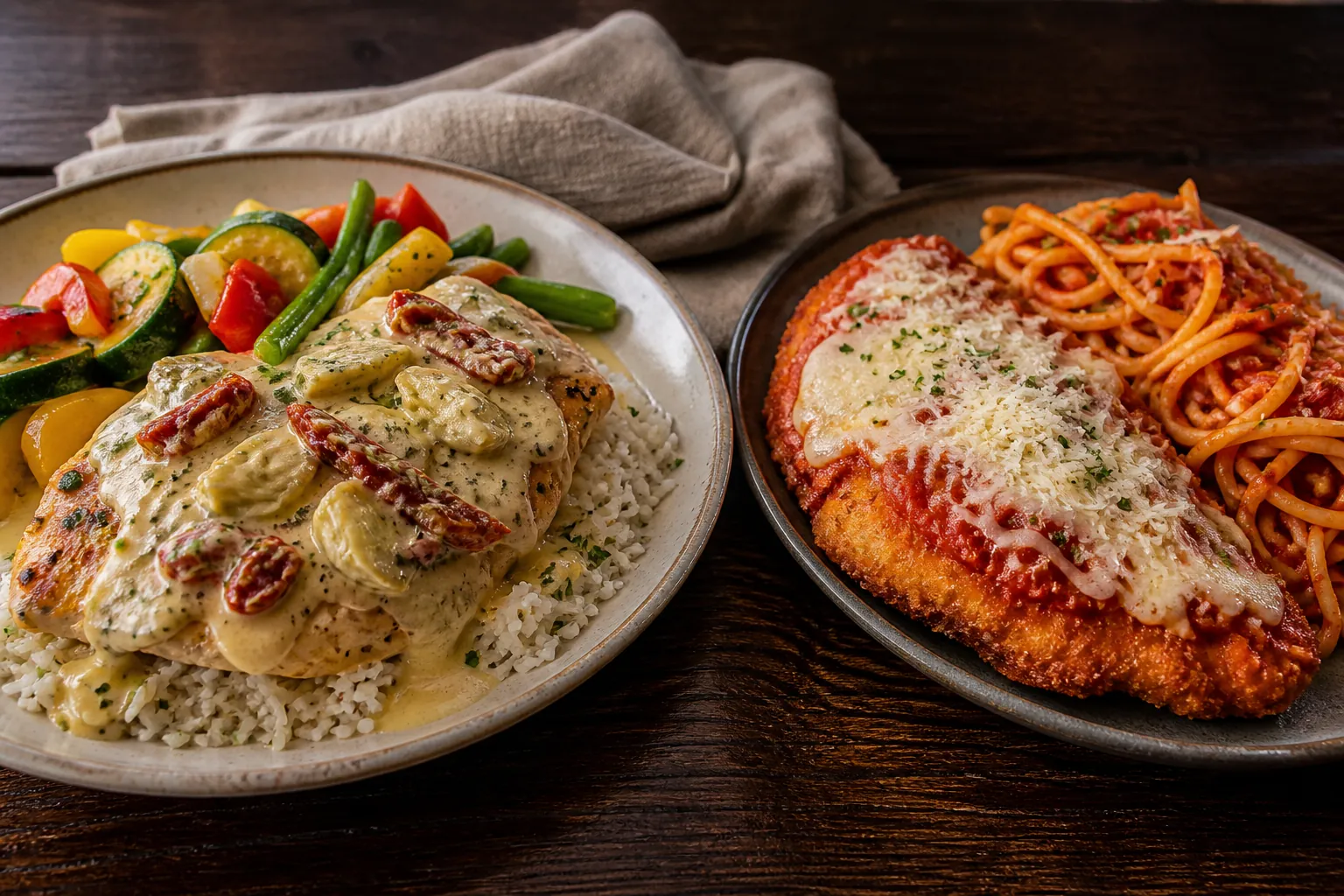
At L.A. Bistro Canton, Chicken Piccata is sautéed chicken breast with artichokes and sun-dried tomatoes, served over basmati rice with sautéed vegetables and finished with house lemon cream sauce. Chicken Parmesan is breaded chicken breast covered with marinara, Parmesan, and mozzarella, with linguine tossed in house marinara alongside it.
One plate is soft, creamy, citrus-led, and organized around rice and vegetables. The other is crisp-edged, tomato-forward, cheesy, and anchored by pasta.
So the useful question is not, “Which chicken dish is better?” It is, “Which kind of dinner do I want tonight?”
This comparison is tailored to L.A. Bistro’s current preparations in Canton, Michigan. It does not pretend that every restaurant makes these dishes the same way. In fact, the local details—artichokes, sun-dried tomatoes, basmati rice, vegetables, house lemon cream, and linguine—are exactly what make the choice clear.
The 30-second verdict
Order Chicken Piccata when you want sautéed chicken, lemon-cream richness, vegetables, rice, artichokes, and sun-dried tomato. It is the plate with more distinct savory components and no breaded crust in the published description.
Order Chicken Parmesan when you want breaded chicken, melted cheese, marinara, and a full pasta side. It is the direct answer to a red-sauce Italian comfort-food craving.
If that resolves the decision, explore the current L.A. Bistro menu. If not, the comparison below follows every part of the plate.
The side-by-side scorecard
| Decision point | Chicken Piccata | Chicken Parmesan |
|---|---|---|
| Chicken preparation | Sautéed breast | Breaded breast |
| Main sauce | House lemon cream | House marinara |
| Toppings | Artichokes and sun-dried tomatoes | Marinara, Parmesan, and mozzarella |
| Starch | Warm basmati rice | Linguine in marinara |
| Vegetable component | Sautéed vegetables included | No separate vegetable listed in the description |
| Dominant character | Creamy, citrus-led, savory | Crispy, tomato-led, cheesy |
| Best for | Diners wanting a composed rice-and-vegetable plate | Diners wanting classic pasta-night comfort |
The scorecard is not a nutrition table. L.A. Bistro does not publish calorie, sodium, protein, or macronutrient values for these two entrées on the current menu. “Sautéed” should not be automatically translated into “light,” because the Piccata includes lemon cream. “Breaded” should not be translated into a precise calorie estimate either. Choose by the actual ingredients and textures unless you have verified nutritional information directly.
Round one: sautéed versus breaded chicken
The cooking style establishes the first major contrast.
Chicken Piccata begins with a sautéed breast. Without a breaded shell between the meat and sauce, the lemon cream sits directly against the chicken. Artichokes and sun-dried tomatoes become part of the same soft, sauced composition.
Chicken Parmesan uses breading to create a crisp exterior. Marinara and melted cheese cover the top, so the best bites combine three textures: crust underneath, sauce across the surface, and softened cheese above it.
There is a natural tension in Chicken Parmesan. The breading is meant to provide structure and crispness, while marinara and mozzarella introduce moisture. Eat it promptly and some crust can remain evident around the edges. Let it sit, especially in a closed takeout container, and the coating will soften.
That makes texture the first decision:
- Choose Piccata if you want tender chicken integrated with sauce.
- Choose Parmesan if breaded chicken is part of the craving.
- Choose Piccata if you dislike the contrast of a crisp coating under wet sauce.
- Choose Parmesan if “chicken plus pasta” should feel like one red-sauce meal.
Round two: lemon cream versus marinara
These sauces do more than change flavor. They determine how every other component reads.
Lemon cream in the Piccata
L.A. Bistro’s house lemon cream sauce brings richness, garlic-free or garlic-forward status not specified here, and citrus brightness to the plate. The current menu calls it lemon cream; it does not publish a complete recipe.
The sauce touches chicken, basmati rice, artichokes, sun-dried tomatoes, and vegetables. Rice absorbs it differently from pasta. Instead of coating long strands, the cream settles around individual grains and connects the protein to the sides.
The sun-dried tomatoes add concentrated tomato flavor without turning the entire plate into a red-sauce entrée. Artichokes add a tender, savory vegetable note. Together they prevent “cream sauce” from being the whole story.
Some diners arrive with a fixed picture of what Chicken Piccata must contain. L.A. Bistro’s listed version should be judged by its own menu description. The current description does not list capers. It does list artichokes, sun-dried tomatoes, rice, vegetables, and house lemon cream. If one ingredient determines the order for you, ask rather than relying on the dish name alone.
Marinara in the Parmesan
Chicken Parmesan uses house marinara twice: over the breaded chicken and around the linguine. That repetition is deliberate. Tomato connects the protein and pasta so the plate eats as one unified idea.
Parmesan contributes a salty, savory edge. Mozzarella adds stretch, softness, and a mellow dairy layer. The cheese tempers the tomato acidity while also making the entrée feel fuller.
Choose this route when marinara is not merely acceptable but central to the craving. If you would rather have citrus, cream, vegetables, and rice, the Piccata is built for that preference from the start.
Round three: rice and vegetables versus linguine
The side dish may settle the debate faster than the chicken.
Chicken Piccata arrives over warm basmati rice with sautéed vegetables. That creates several small decisions within the plate. You can taste chicken with the lemon cream, fold sauced rice into a bite, or use the vegetables to interrupt the richness.
Chicken Parmesan arrives with linguine tossed in marinara. The starch is not a quiet background. It repeats the sauce and extends the Italian-American comfort-food experience beyond the chicken.
Ask yourself which sentence sounds better:
I want chicken with a complete rice-and-vegetable plate.
or
I want breaded chicken and a side of red-sauce pasta.
The first sentence is Piccata. The second is Parmesan.
For a table ordering several dishes, the starch can also create contrast. Someone ordering seafood pasta may appreciate Piccata’s rice and vegetables rather than adding another linguine plate. A table focused entirely on Italian comfort food may prefer the coherence of Chicken Parmesan.
Round four: sharp accents versus familiar comfort
Artichokes and sun-dried tomatoes make the Piccata more ingredient-driven. A diner encounters creamy chicken, a piece of artichoke, concentrated tomato, basmati rice, and sautéed vegetables in varying combinations. The plate changes from forkful to forkful.
Chicken Parmesan is more unified. Marinara, breading, mozzarella, Parmesan, chicken, and linguine repeat a familiar pattern. The pleasure comes from consistency: crispy and tender, tomato and cheese, chicken and pasta.
Neither approach is inherently more sophisticated. A composed plate with several components can be exactly right one evening and overly busy the next. Familiar comfort can be deeply satisfying when it matches the reason for going out.
Use mood as a tiebreaker:
- Curious about contrasting vegetables and savory accents? Piccata.
- Looking for a dependable red-sauce favorite? Parmesan.
- Want every bite to offer a slightly different balance? Piccata.
- Want the plate to stay centered on tomato, cheese, chicken, and pasta? Parmesan.
Which one feels richer?
Richness has more than one source.
Chicken Piccata includes a cream sauce. Chicken Parmesan includes breading, two cheeses, marinara, and linguine. It would be inaccurate to declare one universally “lighter” from the names alone.
The experience of richness differs:
- Piccata delivers smooth, dairy-led richness distributed through chicken and rice.
- Parmesan delivers layered richness through fried or cooked breading, melted cheese, tomato sauce, and pasta.
If creamy sauces become tiring for you over a full entrée, Parmesan may feel easier even though it is breaded and cheesy. If a breaded chicken-and-pasta combination feels heavy, Piccata’s vegetables and rice may create the balance you prefer even with lemon cream.
Portion needs vary, too. The current menu offers an additional chicken breast with either dish for an extra charge. Check the current menu for availability and pricing. More protein can help when someone has a larger appetite, but it also changes the ratio of sauce, starch, and vegetables. Do not add it automatically before considering an appetizer or the rest of the meal.
A sharing strategy that solves the tie
When two diners are equally split, one of each can create a useful table comparison—provided both diners are comfortable sharing and have no conflicting allergies or restrictions.
The two dishes overlap just enough to make sense together: both center chicken, both include tomato in some form, and both use a composed sauce. Yet they contrast on nearly everything else.
A practical two-person approach is:
- Choose one modest starter or salad rather than several heavy appetizers.
- Order one Chicken Piccata and one Chicken Parmesan.
- Taste each entrée as plated before swapping a portion.
- Keep the rice-and-vegetable side with the Piccata sauce and the linguine with the marinara.
That last point matters. Turning the meal into a random mixed platter hides the design of each entrée. Taste why basmati rice works with lemon cream and why linguine works with marinara before experimenting.
For a wider range of shared-order ideas, the family dinner guide for Canton and large-group dinner guide address tables with more preferences to satisfy.
Which entrée fits the occasion?
Weeknight dinner
Choose based on the side you want most. Piccata creates a protein-rice-vegetable plate without ordering those elements separately. Parmesan turns the night into a pasta dinner.
Date night
Either works. Piccata offers more ingredient conversation, while Parmesan is a recognizable comfort choice. If both diners want to compare, order one of each. The Canton and Plymouth date-night guide helps plan the rest of the evening and meal.
Family meal
Chicken Parmesan may be more familiar to diners who already enjoy breaded chicken, marinara, mozzarella, and pasta. Piccata may suit someone who prefers sautéed chicken and vegetables. Familiarity is personal, so do not assume children or older relatives all want the same plate.
Celebration dinner
Piccata’s composed presentation can feel suited to a plated celebration meal. Parmesan answers the guest who wants abundant comfort rather than novelty. For birthdays, reservations and group-order planning matter more than declaring one dish “special enough.” See the birthday dinner guide for Canton for practical questions, while verifying every guest’s dietary requirements independently.
Allergy and dietary questions for both dishes
The short menu descriptions make several likely concerns visible, but they are not complete ingredient or cross-contact statements.
Chicken Piccata questions
The lemon cream sauce makes dairy an immediate concern. Ask what the sauce contains, whether it can be modified, and whether removing visible sauce would meaningfully address the restriction. Also discuss any concerns about artichokes, sun-dried tomatoes, rice seasoning, vegetable preparation, or shared cookware.
The current description does not label the entrée gluten-free. Sautéed chicken does not automatically mean the entire plate contains no wheat or gluten. Sauces, seasonings, thickeners, shared utensils, and prep surfaces all require verification when medically relevant.
Chicken Parmesan questions
Breaded chicken usually raises wheat and gluten questions. Parmesan and mozzarella raise dairy questions. Marinara ingredients, pasta, egg used in breading, and shared cooking equipment may add other concerns.
Simply removing the cheese does not transform Chicken Parmesan into a dairy-free or allergen-safe dish without confirmation. The breading, cooking process, sauce, and pasta still need discussion.
Halal questions
Neither chicken entrée carries halal-certified wording in the current menu data. Do not assume that the halal-certified labels shown on specific steak and lamb items apply to chicken, sauces, cheese, or shared preparation.
If halal compliance matters, ask about the exact chicken product, sauce ingredients, cheese, cooking method, and shared equipment. Diners follow different standards, so explain yours clearly. The halal Italian food guide for Canton offers a more detailed question framework without declaring unlabeled items halal.
For a serious allergy, contact the restaurant before visiting when possible and repeat the conversation when ordering. Menus can change, and no general blog post can replace current information from the kitchen.
The takeout rematch
These entrées travel differently.
Chicken Piccata’s sauce can settle into the basmati rice during the drive. That may deepen the flavor, but the rice can absorb more cream than expected. The vegetables can also continue softening inside a warm closed container.
Chicken Parmesan faces a different issue: steam. Marinara and melted cheese already add moisture to the breaded crust, and trapped steam softens it further. The linguine continues taking up marinara as it sits.
For either dish:
- Pick up close to mealtime.
- Keep the container flat.
- Avoid leaving dinner in the car while completing errands.
- Reheat gently and only as much as needed.
- Refrigerate leftovers promptly and use current food-safety guidance.
If preserving crisp breading is the priority, dine in. If takeout is necessary, accept that Chicken Parmesan may arrive softer than it would at the table. Piccata has no crust to protect, but its rice-to-sauce balance still changes over time.
Final decision: follow the plate, not the name
Choose L.A. Bistro’s Chicken Piccata for sautéed chicken, lemon cream, artichokes, sun-dried tomatoes, basmati rice, and sautéed vegetables. It is the better match when you want several savory components and a cream-sauced plate organized around rice.
Choose L.A. Bistro’s Chicken Parmesan for breaded chicken, marinara, Parmesan, mozzarella, and linguine. It is the better match when you want the classic satisfaction of tomato, melted cheese, crisp-edged chicken, and pasta together.
If you entered the restaurant assuming Piccata meant one fixed traditional checklist, read the description again. Canton’s version tells you exactly what kind of dinner it intends to be. The same is true of Parmesan: its appeal is not mystery but the way familiar parts come together.
Visit the L.A. Bistro chicken menu, choose the plate that matches tonight’s craving, and find both options on Cherry Hill Road in Canton, Michigan.