
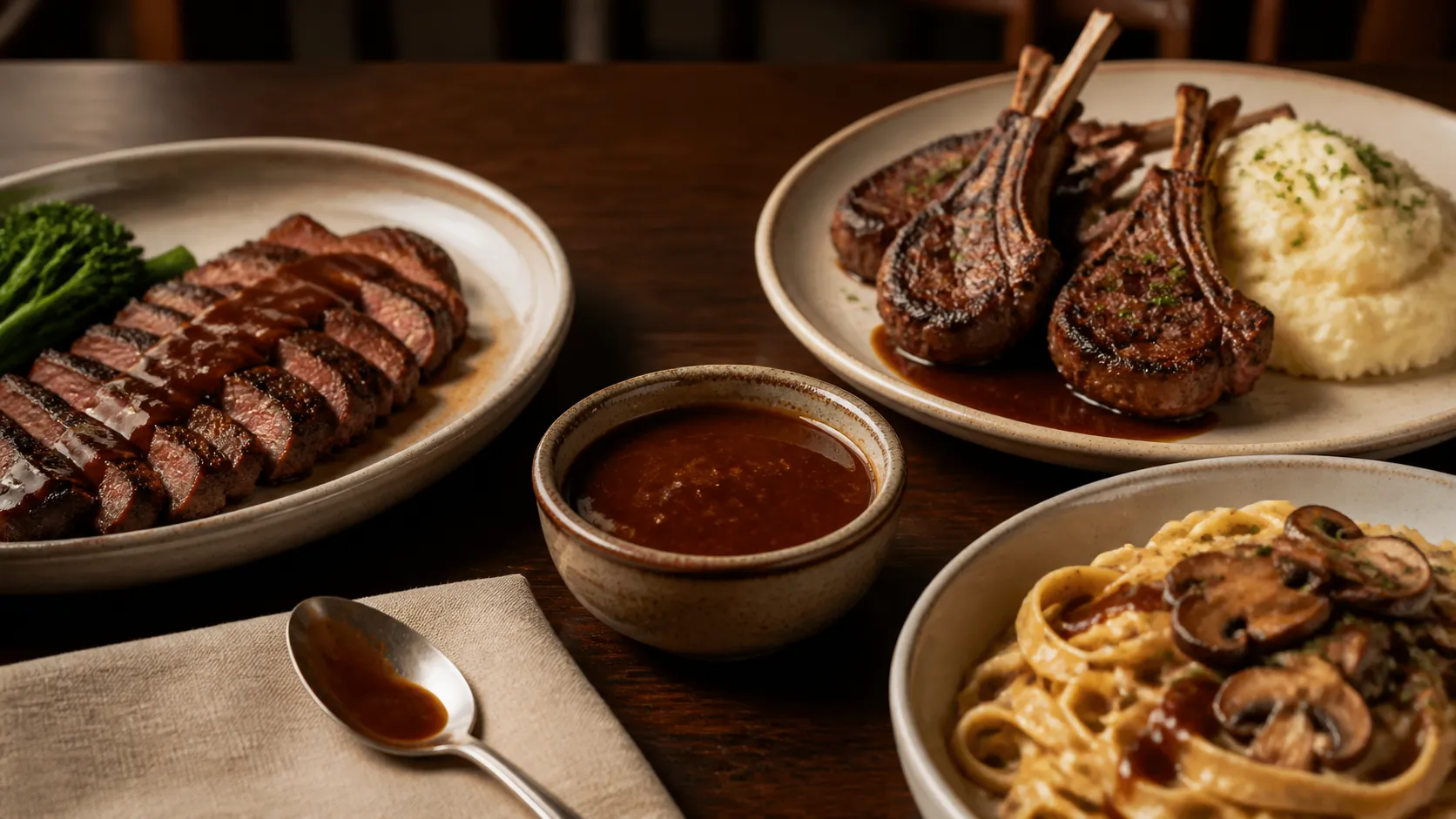
Zip sauce is one of those foods that can reveal whether a steakhouse speaks Metro Detroit.
The name is short, the appearance is modest, and the recipes are rarely identical. Yet a glossy pool of savory sauce beside a charbroiled steak immediately feels familiar to many local diners. It is not the thick, tomato-forward steak sauce sold in a bottle. It is not gravy intended to hide the meat. At its best, zip sauce behaves like a finishing layer: rich enough to carry flavor, thin enough to move across a hot plate, and concentrated enough that a little changes the bite.
L.A. Bistro Canton uses its house zip sauce across several parts of the menu. It accompanies the current filet mignon, N.Y. strip, lamb chops, ribeye, and Salmon, Shrimp and Lamb Combo. It also joins Alfredo sauce and Portobello mushrooms in Zip Sauce Fettuccine Alfredo.
Those uses reveal more about zip sauce than one supposed “secret recipe” could. The same sauce can underline beef, connect lamb to potatoes, season vegetables, or pull pasta into a Metro Detroit steakhouse direction.
This guide explains that work without claiming to disclose L.A. Bistro’s private recipe.
A Detroit steakhouse tradition with a family tree, not one formula
Local food histories commonly trace zip sauce’s Detroit steakhouse fame to restaurateur Mario Lelli and the Lelli’s tradition. The story has been repeated through generations of Metro Detroit dining, even as restaurants developed their own versions. Gander’s history of Mario Lelli’s zip sauce follows that local lineage, while Chevy Detroit’s regional overview describes how the sauce moved beyond steak to chicken, shrimp, and burgers.
That family tree matters because “zip sauce” is a style, not a protected universal recipe. One restaurant’s version may be lighter or darker, more buttery, more broth-forward, saltier, more peppery, or more intensely seasoned than another. Some published home recipes use ingredients that a specific restaurant may not use at all.
For that reason, diners should avoid two assumptions:
- A recipe found online proves what is in L.A. Bistro’s house sauce.
- An ingredient confirmed at one Metro Detroit steakhouse applies to every other zip sauce.
The menu name tells you the regional direction. Only the restaurant can answer questions about its current ingredients.
Job one: amplify a tender filet without covering it
L.A. Bistro’s current Creekstone Filet Mignon is a 10-ounce USDA Prime, halal-certified cut, charbroiled and served with zip sauce, mashed potatoes, and sautéed vegetables.
Filet is known for tenderness and a relatively refined beef flavor. A heavy sauce could overwhelm it. Zip sauce works when it fills the gaps between seared exterior, mild center, and creamy potato without making every component taste identical.
Try the plate in stages:
- Taste the first piece of filet with no added sauce
- Drag the second through a small amount of zip sauce
- Combine the third with mashed potato and sauce
- Add a vegetable to the fourth
That sequence reveals what the sauce contributes. It may add savory depth, salt, richness, and aroma, but the charbroiled beef should remain identifiable.
Our halal filet mignon guide for Canton explains the cut, doneness, and complete plate in detail.
Job two: meet the stronger character of N.Y. strip and ribeye
The Creekstone N.Y. Strip is currently a 14-ounce USDA Prime, halal-certified steak. It offers a firmer bite and more assertive beef character than filet. Zip sauce does not have to protect a delicate center in the same way; it can stand beside stronger char and texture.
The 18-ounce Prime Ribeye brings even more richness and marbling, along with sautéed mushrooms. Its current description also includes zip sauce, mashed potatoes, and vegetables. The ribeye description does not use halal-certified wording, so this guide does not apply that label to it.
On richer cuts, sauce quantity matters. A steak with generous marbling already carries fat and flavor. Pouring sauce across the entire surface before tasting can flatten the differences between sear, fat, and center. Use the sauce as an accent first.
For diners comparing Canton steak choices, the halal steak restaurant guide separates current menu labels from texture, portion, and preparation.
Job three: bridge lamb, potatoes, and vegetables
The current Grilled Lamb Chops entrée includes three USDA Prime, halal-certified chops, mashed potatoes, sautéed vegetables, and zip sauce.
Lamb has a distinct flavor that does not need to imitate beef. Here, zip sauce acts as a bridge rather than a disguise. It connects charred chop edges to creamy potatoes and provides one common savory note across the plate.
Bone-in chops create varied bites. Meat near the eye is thicker and tender. Edges carry more char. Fat brings richness. Try sauce differently with each area rather than treating the chop as one uniform piece.
The Salmon, Shrimp and Lamb Combo also includes zip sauce, but that plate introduces lemon cream sauce for seafood. Keep the sauces separate at first. Zip sauce belongs naturally with the halal-certified lamb component; lemon cream belongs with salmon and shrimp. Combining them immediately erases the contrast the plate is designed to provide.
Read the halal lamb-chop guide near Detroit for doneness, sides, and menu-verification advice.
Job four: turn Alfredo into a Detroit crossover
The most revealing use may be Zip Sauce Fettuccine Alfredo.
The current menu describes fettuccine tossed with house-made Alfredo and zip sauces plus Portobello mushrooms, finished with Parmesan. This is not steak with sauce beside it. Zip sauce becomes part of the pasta coating.
Alfredo brings creaminess, dairy richness, and Parmesan. Portobello mushrooms bring earthiness. Zip sauce can deepen the savory profile and shift the pasta away from a purely pale cream sauce.
This is a local crossover in spirit: Italian pasta meeting a Detroit steakhouse flavor. It suits diners who like Alfredo’s texture but want more savory depth and mushroom character.
Compare it with regular Fettuccine Alfredo before ordering:
| Decision | Fettuccine Alfredo | Zip Sauce Fettuccine Alfredo |
|---|---|---|
| Main direction | Creamy, Parmesan-forward comfort | Creamy plus deeper savory steakhouse notes |
| Vegetables | None named in current description | Portobello mushrooms |
| Sauce structure | House Alfredo | House Alfredo and zip sauces |
| Best for | A classic, simple cream-sauce craving | A richer Metro Detroit crossover craving |
Neither is the “upgraded” version of the other. They answer different appetites.
What zip sauce usually feels like on the palate
Because recipes vary, it is safer to describe the job and texture than to declare a fixed ingredient list.
Glossy
Zip sauce typically appears shiny and fluid enough to spread across a warm plate. It should coat a bite without behaving like a thick paste.
Savory
Its central purpose is to deepen grilled meat. The flavor tends toward umami, salt, browned notes, and richness rather than sweetness.
Concentrated
A small amount can season steak and potatoes. The diner controls intensity by dipping, spooning, or mixing.
Warm and aromatic
Heat releases aroma and keeps the sauce integrated with hot meat. As the plate cools, a fat-rich sauce may thicken or separate slightly.
Restaurant-specific
The final balance belongs to the house. A diner who grew up with one steakhouse version may find another lighter, darker, or more seasoned. Difference does not automatically mean error.
Zip sauce is not the same as bottled steak sauce
Many commercial steak sauces are thick, tangy, dark, and shelf-stable, often with noticeable sweetness or acidity. Zip sauce is generally served warm and integrated into a restaurant plate.
That difference changes how it is used. Bottled sauce may sit on top of meat as a bold condiment. Zip sauce moves into steak juices, mushrooms, potatoes, and vegetables. It is closer to a finishing sauce than a masking one.
Do not judge either category as universally superior. A grilled burger may benefit from a strong tangy condiment; a tender filet may need only a small savory gloss. The food determines the role.
Ingredient questions the name cannot answer
“Zip sauce” is not an ingredient statement.
Diners may need to ask about:
- Dairy or butter
- Beef, chicken, or other stock
- Soy or wheat-containing seasonings
- Alcohol, wine, or spirits
- Garlic, onion, or spice blends
- Allergens and shared preparation
- Whether the sauce is vegetarian
- Whether the recipe differs in the pasta dish
This is particularly important for halal-conscious diners. A steak’s halal-certified menu description does not automatically establish that its accompanying sauce meets every diner’s halal standard. Ask whether the sauce contains alcohol or animal-derived stock and how it is prepared.
Vegetarian diners considering Zip Sauce Fettuccine Alfredo should not infer that it is vegetarian merely because no meat is named in the short description. Ask whether the zip sauce contains meat stock or another animal-derived ingredient.
Guests with celiac disease or allergies should request current recipe and cross-contact information. A homemade-style sauce can still contain gluten, soy, dairy, or other allergens.
Call L.A. Bistro Canton at (734) 392-7028 when the answer determines whether someone can order safely.
How much sauce should you use?
There is no correct amount, but there is a useful method.
- Taste the main ingredient first.
- Add enough sauce to one bite, not the whole plate.
- Notice whether the sauce strengthens or hides the sear.
- Try it with potato or mushroom.
- Adjust from there.
This approach respects the kitchen’s charbroiling and your own palate. It also prevents an irreversible flood of sauce across food you might have preferred less coated.
If you like sauce on the side, ask whether that plating is possible. If you need it omitted for dietary reasons, request the change before preparation rather than scraping it away after service.
A plate-by-plate pairing guide
Filet mignon
Use a light amount. Let tenderness and char lead; sauce supplies depth.
N.Y. strip
Use enough to match the firmer, beefier bite. Alternate sauced and unsauced pieces.
Ribeye
Taste the marbling first. Pair sauce with mushrooms or potatoes to avoid making the richest component even heavier.
Lamb chops
Try sauce on the charred edge and beside mashed potatoes. Keep lamb flavor distinct.
Salmon, shrimp and lamb combination
Keep zip sauce with lamb and lemon cream with seafood for the opening bites.
Zip Sauce Fettuccine Alfredo
The sauce is already integrated. Add protein only after considering the pasta’s existing richness.
Explore exact current descriptions on the L.A. Bistro menu.
Zip sauce at lunch, date night, and family dinner
Lunch
Zip Sauce Fettuccine Alfredo can bring the local flavor into a midday pasta without ordering steak. It is a rich lunch, so consider the rest of the afternoon before adding a heavy appetizer.
Date night
One diner can order filet or strip with zip sauce while the other chooses pasta, seafood, or vegetarian food. Sharing a taste can become part of the meal without requiring identical entrées. See the Canton and Plymouth date-night guide.
Family dinner
Zip sauce can connect adult steak or lamb plates while children or other relatives choose pizza, pasta, chicken, or burgers. Ask for sauce placement that fits individual preferences rather than mixing it into shared food.
Birthday or milestone
The regional sauce makes a steak dinner feel connected to Metro Detroit. Confirm the exact halal-labeled cut and sauce ingredients before a dietary-sensitive celebration. The halal birthday dinner guide covers the rest of the planning.
Takeout changes the sauce
Zip sauce is designed for warm food. During travel, steak rests, potatoes cool, and sauce can thicken.
For takeout:
- Coordinate pickup closely with eating time
- Keep containers flat
- Ask whether sauce can be packaged separately if preferred
- Avoid leaving food in the vehicle during errands
- Plate and eat promptly after arriving
- Refrigerate leftovers safely
Reheating steak can move it beyond the original doneness. Reheating a fat-rich sauce too aggressively can cause separation. Ask the restaurant for current instructions rather than applying one method to every component.
Dine in when the contrast between hot charbroiled meat and warm fluid sauce is the main reason for ordering.
Frequently asked questions
What is Detroit zip sauce?
It is a warm, savory finishing sauce closely associated with Metro Detroit steakhouses. Recipes vary by restaurant, so the name describes a regional style rather than one universal formula.
Did zip sauce originate in Detroit?
Local histories trace its Detroit steakhouse fame to Mario Lelli and the Lelli’s tradition. Different restaurants later developed their own versions.
What is in L.A. Bistro’s zip sauce?
The full current recipe is not published on the menu. Contact the restaurant about ingredients, allergens, alcohol, stock, dairy, or vegetarian status rather than relying on online copycat recipes.
Which L.A. Bistro dishes include it?
Current descriptions include zip sauce with filet mignon, N.Y. strip, lamb chops, ribeye, the Salmon, Shrimp and Lamb Combo, and Zip Sauce Fettuccine Alfredo.
Is zip sauce halal?
The menu does not label the sauce halal-certified. Diners should ask about alcohol, stock, seasonings, and preparation according to their own standard, even when ordering a halal-certified meat item.
Is zip sauce vegetarian?
Do not assume. Some zip sauces can use meat-based stock or seasonings. Ask specifically about L.A. Bistro’s current recipe, including the version used in fettuccine.
Can I get it on the side?
Ask when ordering. The restaurant can confirm whether side service or omission is available for the chosen dish.
A local sauce earns its place one bite at a time
Detroit zip sauce matters because it does more than decorate steak. It carries a local dining tradition while adapting to the plate in front of it.
At L.A. Bistro Canton, the house sauce takes four clear jobs: supporting tender filet, matching strip and ribeye, bridging lamb to potatoes, and deepening Alfredo fettuccine with mushrooms. Those uses make it part of the restaurant’s Italian, Mediterranean, and Metro Detroit identity at once.
Review the current menu, choose the cut or pasta that matches the craving, and call (734) 392-7028 with ingredient questions. Then begin with less sauce than you think you need. Zip sauce is at its best when it makes the next bite taste more like the food—not only more like the sauce.