
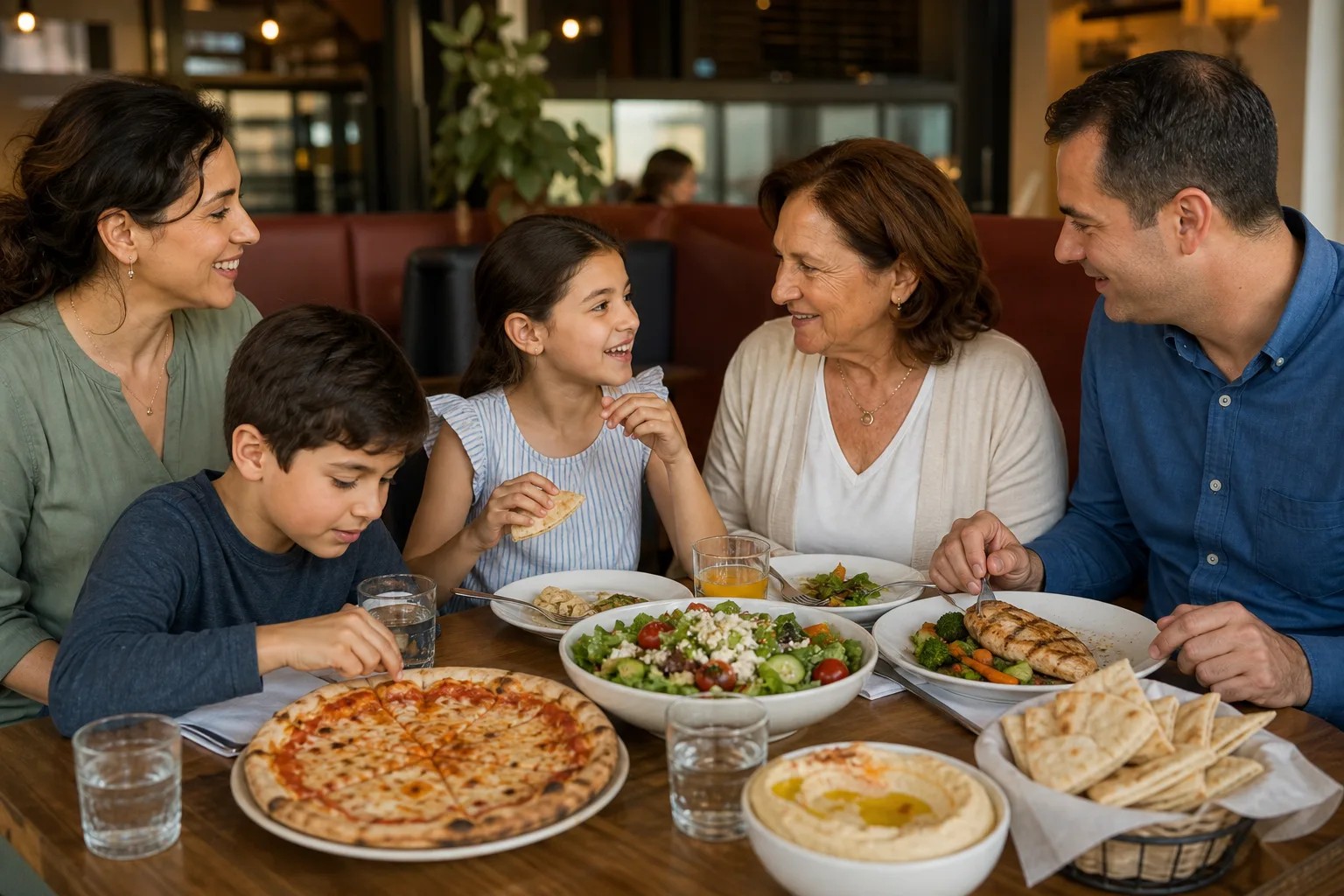
Family dinner sounds like the easiest kind of restaurant visit. Nobody needs an elaborate itinerary. The goal is simply to sit down, eat something good, and spend time together.
In practice, a family table can be the most complicated one in the room. A younger child is already hungry. A teenager wants a meal substantial enough to count as dinner. One adult would like seafood, another wants pasta, and a grandparent prefers something familiar and easy to enjoy. A vegetarian relative needs an actual entrée. Someone is arriving from work, someone else is coming from practice, and nobody wants the evening to turn into a forty-minute debate over menus.
The answer is not finding one food that every person agrees to eat. It is choosing a restaurant that gives different people clear, comfortable paths through the same meal.
L.A. Bistro Canton is family owned and has served the community from Cherry Hill Road since 2018. Its menu ranges from Italian and Mediterranean favorites to chicken, seafood, halal-certified steak and lamb selections, rice bowls, pizza, handhelds, vegetarian dishes, children’s meals, and desserts. That range makes the restaurant a useful example of how to plan a family dinner in Canton without reducing every guest to the same lowest-common-denominator choice.
This guide focuses on the practical details: when to go, what to check first, how to order for different ages, when to share, when to keep things separate, and how to decide between dining in and bringing dinner home.
First, define the family dinner you are planning
Not every family meal needs the same restaurant experience. Before opening a menu, identify which version of dinner this is.
An ordinary Tuesday meal after school and work needs efficiency. A Sunday gathering with grandparents needs comfort and time. A child’s birthday needs familiar food and enough flexibility for excitement. A graduation meal needs a sense of occasion. Dinner after a game or practice needs substantial choices and a plan that accounts for unpredictable timing.
Use four questions:
- How many people are coming? A household of four can often arrive differently from an extended family of twelve.
- What is the youngest diner’s realistic schedule? A meal planned after bedtime is not rescued by a perfect entrée.
- Does anyone have dietary requirements? Halal sourcing, vegetarian choices, allergies, and other needs belong in the first conversation.
- Is the food the entire event or one part of it? A pre-movie dinner needs different pacing from a birthday with dessert and gifts.
Once these answers are clear, the restaurant decision becomes much easier. Our broader guide to choosing where to eat dinner in Canton can help compare atmosphere, value, logistics, and menu variety across occasions.
A genuinely family-friendly menu has more than a kids section
A dedicated children’s menu is helpful, but it is only one part of family dining. The adults and older children also need choices that feel worth leaving home for.
L.A. Bistro’s kids menu includes grilled chicken with potatoes or rice, chicken tenders, chicken nuggets, spaghetti marinara, fettuccine Alfredo, and cheese pizza. These options give younger diners recognizable flavors without forcing every child toward fried food. A child comfortable with the larger menu can also share pizza, pasta, bread, rice, vegetables, or an appetizer with the table.
For teenagers and adults, the main menu expands considerably. Chicken Parmesan and Fettuccine Alfredo provide familiar Italian comfort. Firecracker Chicken and Buffalo Chicken Pizza bring more heat. Rice bowls, burgers, rollups, and baguettes suit diners who want something less formal. Salmon, shrimp, seafood pasta, steaks, lamb chops, vegetarian entrées, and house specialties create room for a more complete evening.
The key is not the number of items. It is the number of different appetites the menu can answer. A useful family restaurant should allow a cautious eater and an adventurous eater to order with equal confidence.
Previewing the menu is not overplanning
Looking at the menu before leaving can remove the least enjoyable part of family dinner: making every decision while hungry.
Parents do not need to choose for everyone in advance. Simply identify two or three likely options for younger diners, point out vegetarian or dietary choices to the people who need them, and decide whether the family wants to begin with a shared appetizer. This preparation lets the table talk about the evening rather than studying pages in silence.
The current L.A. Bistro menu includes descriptions and prices. Read the full description, especially when a dish name sounds familiar. The Bistro’s Spaghetti Aglio Olio, for example, adds Portobello mushrooms, sun-dried tomatoes, green pepper, pesto, Parmesan, and basil to the garlic-and-oil foundation. Chicken Piccata is served over basmati rice with artichokes, sun-dried tomatoes, vegetables, and lemon cream sauce. Knowing those details prevents surprises and helps family members choose based on ingredients, not assumptions.
For allergies or strict dietary practices, an online menu is only the beginning. Call the restaurant before visiting, explain the specific need, and ask about ingredients, preparation, and cross-contact. A serious dietary question should never be left until a hungry child or a large family is already seated.
The best first course is the one that reduces pressure
An appetizer can do more than add food. It can give a family time to settle, let a late-arriving appetite calm down, and create a shared beginning before individual entrées appear.
Hommous with pita is an approachable choice for many ages. Caprese offers tomatoes, fresh mozzarella, basil, and vinaigrette. Spinach and Artichoke Dip comes with pita chips. Calamari suits families who already enjoy it, while Ravioli Palomino introduces a warm pasta starter. Firecracker Shrimp and Crispy Firecracker Chicken are better for tables that want sweet and spicy flavor.
One or two appetizers are usually enough. Ordering half the starter section can make the main meal harder for children to navigate and leave everyone full before the entrées arrive.
There is also no rule that every family must share. A child who becomes anxious when food is passed around may be happier with a clearly defined plate. A guest with an allergy may need separation. Family hospitality is not measured by how many forks enter the same dish; it is measured by whether people can eat comfortably together.
Ordering for young children: familiar, timely, and complete
Young diners often do better when their order is placed promptly. If the adults need more time, ask whether the children’s food can be started first. This is a practical request, not a failure of etiquette.
Choose a meal with a recognizable center and at least one dependable side. Grilled chicken with rice or potatoes can work for a child who prefers simple food. Spaghetti marinara and fettuccine Alfredo offer familiar pasta routes. Cheese pizza is easy to divide, while tenders or nuggets may suit a very selective evening.
Avoid turning dinner into a nutrition negotiation in public. If a child tries a cucumber from the salad, a piece of pita, or a bite of a parent’s salmon, that can be a positive part of the evening. If not, the family still benefits from a calm meal.
Portion expectations also matter. Ask about sizes when necessary, especially if two young children may be able to share or an older child is likely to need a main-menu item. The goal is a satisfied child, not an impressive amount of leftover food.
Ordering for teenagers: give appetite and independence room
Teenagers often sit awkwardly between the kids menu and adult dining expectations. Let them use the full menu rather than assuming a children’s portion will work.
A Creekstone Burger, Steak Portobello Rice Bowl, pasta with added chicken or shrimp, Chicken Parmesan, pizza, a baguette, or a rollup can answer a larger appetite. A teen interested in trying something new might choose Almond Chicken, Firecracker Shrimp, Linguine Frutti Di Mare, or a grilled lamb chop dinner.
Giving teenagers control over their order can improve the entire table. They can check prices, read descriptions, ask a server a question, and make a decision within the family’s expectations. Restaurant meals are a useful place to practice independence because the boundaries are clear and the consequences are manageable.
If a teen wants the most expensive steak on the menu, the family can discuss budget without embarrassment. Offer categories or a spending range before ordering rather than correcting the choice after it has been announced.
Ordering for grandparents and a multigenerational table
Older relatives should not be treated as though they all want bland food or small portions. Ask what sounds good. The practical concerns may be different: seating comfort, hearing conversation, navigating the room, dietary restrictions, or finishing dinner before it becomes too late.
The menu offers familiar dishes such as Chicken Parmesan, Fettuccine Alfredo, Spaghetti Bolognese, Chicken Piccata, grilled salmon, and Mediterranean Salad. Rice bowls and sandwiches provide more casual alternatives. A grandparent who enjoys bold flavor may be the first person at the table to order Firecracker Shrimp or Diavolo Pasta.
For multigenerational groups, choose appetizers that can be reached easily and avoid overcrowding the table. If sharing tastes, ask before moving someone’s plate. Good family dining includes respect for different levels of comfort, not an expectation that everyone participate in the same way.
Vegetarian and halal choices should be discussed accurately
A family gathering may include several dietary priorities at once. Clear wording prevents well-intentioned mistakes.
L.A. Bistro offers vegetarian entrées including Portobello Risotto, Ravioli Di Portobello, and Eggplant Parmesan. Vegetarian pizzas, a Portobello rice bowl, and a lentil-and-bean Veggie Burger add more formats. Many of these dishes contain dairy, so “vegetarian” should not be treated as “vegan.” Guests needing vegan preparation should ask what is currently possible.
The restaurant’s menu specifically describes its Creekstone Farms USDA Prime filet mignon, New York strip, grilled USDA Prime lamb chops, and Creekstone Burger beef as halal-certified. That does not automatically answer every question about every ingredient or kitchen process. Family members with particular halal requirements should call about the specific dish and current preparation details that matter to them.
Do not appoint one relative to speak for everyone who shares a dietary label. Two people may observe different standards or have different allergy risks. Direct questions are more respectful than assumptions.
Six family dinner paths using the L.A. Bistro menu
These are not fixed packages. They are examples of how a family can reduce decision fatigue by choosing a general direction.
1. The familiar Italian table
Begin with Caprese, calamari, or Ravioli Palomino. Choose Chicken Parmesan, Fettuccine Alfredo, Spaghetti Bolognese, Penne Palomino, or pizza. Finish with tiramisu or chocolate cake if everyone still has room. This route works when familiarity matters more than experimentation.
2. The lighter-feeling family meal
Share hommous and Mediterranean Salad. Choose grilled salmon, Chicken Piccata, a salad with protein, Spaghetti Aglio Olio, or a rice bowl. “Lighter” means different things to different people, so use the actual descriptions and ask about modifications rather than assigning moral labels to food.
3. The Bistro favorites table
Start with Firecracker Shrimp. Compare Almond Chicken, Sami’s Special, Firecracker Chicken, or Linguine Frutti Di Mare. These dishes show more of the restaurant’s house combinations of lemon cream, pesto, sweet heat, rice, vegetables, and seafood.
4. The pizza-and-pasta compromise
Order one or two pizzas for the center and let adults or older children add individual pasta, salad, or chicken entrées. This can work well when younger diners want predictable food but the rest of the table wants more variety.
5. The celebration dinner
Share Lobster and Shrimp Bruschetta, Hommous with Steak, or Caprese. Choose halal-certified filet mignon or lamb chops, Salmon Al-Bianca, a seafood combination, or a steak-and-seafood trio. Plan time for dessert and call ahead when the guest count reaches reservation size.
6. The takeout family table
Combine pizza, pasta, rice bowls, sandwiches, or rollups with a large salad and appetizer. Set everything out in serving dishes at home so the meal feels shared without requiring every item to be ordered family style.
For more detail about how the Italian and Mediterranean sides of the menu connect, read our local cuisine guide.
Timing can determine whether dinner feels relaxed
Families often choose a restaurant based on food and underestimate timing. A popular dinner hour may involve a busier room. A very late meal may collide with a child’s bedtime. An early dinner may be calmer but require someone to leave work sooner.
L.A. Bistro’s posted hours begin at 11 a.m. daily. The restaurant currently closes at 9 p.m. Monday through Thursday and Sunday, and at 10 p.m. Friday and Saturday. Hours can change, particularly around holidays, so confirm before an important gathering.
If the family includes young children or relatives who prefer a quieter environment, consider an earlier meal. If everyone is coming from separate places, choose a realistic arrival window and decide whether the first people should wait or be seated. The restaurant asks parties of six or more to reserve by phone, which creates an opportunity to discuss group size directly.
Do not promise the family a perfectly quiet room at a specific time; restaurant volume depends on the day and other guests. Call with concerns, explain what would help, and let the staff tell you what is realistically available.
Phones away is useful, but connection needs something to replace them
Telling everyone to put phones away can create silence if nobody knows what happens next. Give the table an easy starting point.
Ask each person to name one good part and one difficult part of the week. Let younger children choose which appetizer everyone tries first. Invite a grandparent to tell a short story connected to a dish or family tradition. Ask teenagers what meal they would choose for the next gathering. Keep the questions light enough that dinner does not become a formal family meeting.
The restaurant provides the table and food. The family creates the attention. A successful dinner does not require constant deep conversation; comfortable pauses, jokes, and passing a piece of pita count too.
When dining in is not the best family decision
Some nights the kindest plan is takeout. A child may be exhausted. A parent may need to remain near home. The family may want to watch a game, accommodate a relative more comfortably, or avoid coordinating several cars.
L.A. Bistro offers online takeout ordering. For a normal household dinner, order from the restaurant menu. For larger gatherings or trays intended to serve multiple people, review the catering menu and give the restaurant appropriate notice.
Make takeout feel like a family meal by transferring food from containers to the table, setting out plates, and sitting together before screens begin. The goal is not presentation for its own sake. It is creating a shared start and finish to dinner.
Planning a larger family gathering
An extended family dinner can outgrow a standard table quickly. Count every person, including children, before calling. Explain whether the group is celebrating something, whether guests will arrive together, and whether individual ordering or a family-style format makes more sense.
L.A. Bistro offers private event options for occasions such as birthdays, anniversaries, showers, graduations, and other gatherings. Its banquet hall information outlines family-style packages and the current minimum for reserving the entire room. These options are different from simply booking a large dinner table, so start the conversation early.
For a gathering at home or another venue, catering trays may be the most practical way to serve familiar restaurant dishes while controlling the environment.
Frequently asked questions
Is L.A. Bistro Canton family friendly?
The restaurant presents itself as family friendly and offers both a broad adult menu and dedicated kids choices. Families can order pizza, pasta, chicken, rice, vegetables, salads, seafood, burgers, rollups, vegetarian dishes, and more from one table.
Does L.A. Bistro have a kids menu?
Yes. Current kids choices include grilled chicken, chicken tenders, chicken nuggets, spaghetti marinara, fettuccine Alfredo, and cheese pizza. Review the current online menu before visiting because offerings and prices can change.
Can a vegetarian eat a full dinner there?
Yes. The menu lists several vegetarian entrées and casual choices. Dairy is present in many of them, so guests seeking vegan food or managing allergies should ask about ingredients and preparation.
Do families need a reservation?
The posted policy asks parties of six or more to call for a reservation. Smaller families can still call with questions about hours, seating needs, or dietary concerns.
Can we celebrate a birthday or graduation?
Yes. A normal table may suit a smaller celebration, while larger groups can explore private dining, banquet packages, or catering. Contact the restaurant before making invitations or relying on availability.
The best family dinner gives everyone a place at the table
A family-friendly restaurant does not need every person to eat the same food, behave the same way, or experience dinner through the same appetite. It needs enough clarity and flexibility for children, teenagers, adults, grandparents, vegetarians, halal diners, cautious eaters, and adventurous eaters to share one evening.
Plan around the people first. Preview the menu, handle dietary questions directly, choose a realistic time, and call when the group reaches reservation size. At the table, use one shared dish to begin if sharing feels comfortable, then allow individual choices to do their job.
Browse the L.A. Bistro Canton menu, check the current hours and location, or call (734) 392-7028 about a family table. Dinner does not have to be complicated to become a memory. It only needs enough care for everyone to arrive, eat, and feel included.