
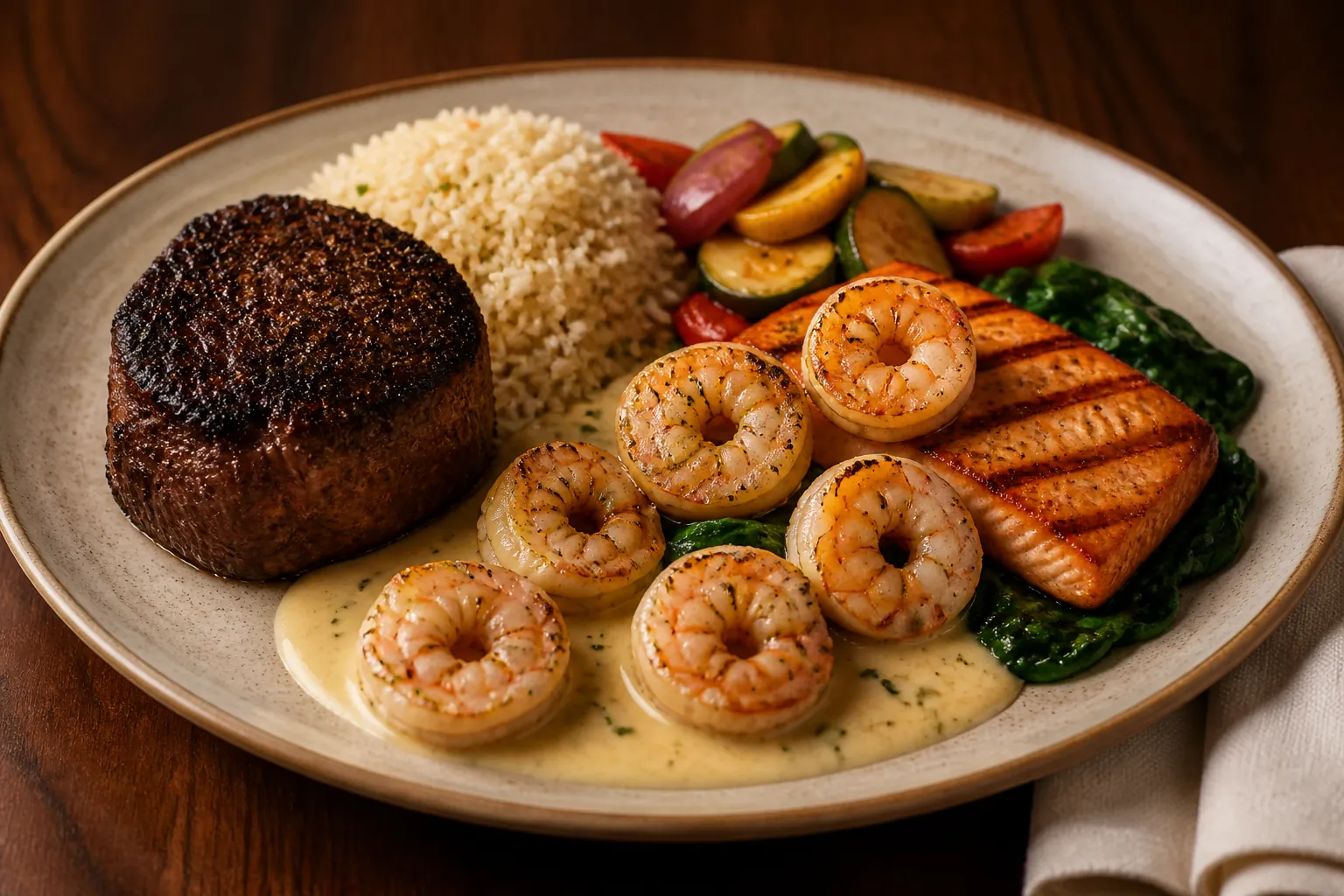
Some combination plates feel like several entrées competing for the same space. A good trio gives every protein a clear reason to be there.
L.A. Bistro Canton’s Filet Mignon, Salmon & Shrimp Trio brings together a 10-ounce Creekstone Farms Prime filet mignon, six jumbo shrimp, and grilled Atlantic salmon. The seafood is topped with house lemon cream sauce and slivered sun-dried tomatoes. Basmati rice, baby spinach, and sautéed vegetables complete the current menu description.
That is not simply “steak and seafood.” It is three different textures, two broad flavor lanes, one creamy bridge, and several supporting sides.
The filet is dense and tender. Salmon is flaky and rich. Shrimp is firm and lightly sweet. Lemon cream connects the two seafoods while allowing the steak to remain a separate centerpiece. Rice receives sauce. Spinach supports the salmon. Vegetables interrupt the protein-rich sequence.
For diners searching for steak, salmon, and shrimp in Canton, Michigan, this guide follows the trio in three acts. It then explains how to order, pace, share, verify, and carry home a plate with more moving parts than a standard entrée.
Before the first act: understand what the menu promises
The current description is unusually specific about several details:
- A 10-ounce filet mignon
- Creekstone Farms Prime beef
- Six jumbo shrimp
- Grilled Atlantic salmon
- House lemon cream sauce
- Slivered sun-dried tomatoes
- Basmati rice
- Baby spinach
- Sautéed vegetables
It does not publish the salmon weight, shrimp preparation beyond their placement in the combination, steak doneness policy, complete sauce recipe, or every seasoning and shared-preparation detail.
Use the listed facts to form expectations, then ask about the details that materially affect your order. That approach is more reliable than filling gaps with assumptions from another restaurant’s surf-and-turf plate.
Act one: filet mignon supplies the quiet center
Filet mignon is valued for tenderness and a relatively fine-grained texture. On a trio plate, that makes it the calmest of the three proteins.
Salmon has a naturally rich fish character. Shrimp has a springier bite. Filet does not need a heavily marbled or aggressively chewy personality to remain distinct; its thickness and tenderness create the contrast.
The menu identifies the cut as a 10-ounce Creekstone Farms Prime filet mignon. “Prime” describes a USDA quality grade, while “filet mignon” describes the tenderloin cut. Those facts do not determine the final doneness, seasoning, or interior temperature.
If steak temperature matters, ask how the kitchen currently handles doneness requests for the trio. The steak shares a plate with seafood and sides, but it should not be assumed to follow a different policy from a standalone cut—or exactly the same one—without confirmation.
Taste the first bite of filet before pulling lemon cream across the plate. The sauce is listed with the salmon and shrimp, not as the defining filet sauce. A clean opening bite lets you understand the steak on its own.
Choose this trio over a ribeye-based dinner when tenderness is the steak priority and the meal also needs room for two seafood textures. A larger or richer steak could dominate the plate; filet is capable of holding the center without drowning out the salmon and shrimp.
Act two: grilled Atlantic salmon brings richness and flake
Salmon changes the physical rhythm of the meal.
A fork separates a grilled fillet into flakes. That texture is softer and more layered than the filet, yet fuller than the shrimp. The fish also brings its own natural richness, which is why lemon works as a useful counterpoint.
In the current trio, the salmon rests with baby spinach and receives house lemon cream sauce plus slivered sun-dried tomatoes. Each part has a role:
- Grilling provides exterior color and savory character.
- Baby spinach gives the fish a green, tender base.
- Lemon cream adds smoothness and citrus brightness.
- Sun-dried tomatoes provide concentrated sweet-acidic accents.
Do not treat the spinach as an incidental garnish. It catches sauce and salmon juices, creating a softer vegetable component beneath the fish. A bite that combines salmon, spinach, and a small amount of lemon cream tastes different from salmon alone.
Sun-dried tomatoes should also be distributed rather than consumed all at once. Their concentrated flavor can wake up a later salmon bite after the palate has adjusted to cream.
If salmon is the only seafood you want, compare the trio with Salmon Al-Bianca on the current seafood menu. The trio makes sense when the fish should share attention with steak and shrimp.
Act three: six jumbo shrimp create the countable contrast
Shrimp is the most divisible protein on the plate.
The menu specifies six jumbo pieces. That lets one diner plan the sequence—perhaps two early, two near the middle, and two near the end—or lets two diners divide the shrimp evenly while sharing.
Their firm, springy texture resets the palate after tender filet and flaky salmon. Lemon cream clings to their curved surface, while sun-dried tomato can add a sharper accent.
Six is enough for shrimp to behave like a co-headliner rather than a decorative surf-and-turf token. Still, the pieces remain smaller than the filet and salmon, so they can be moved through the meal at the diner’s preferred pace.
The shrimp also introduces a specific allergen category. Someone who can eat finned fish is not automatically able to eat crustacean shellfish, and the reverse can also be true. A three-protein plate demands exact language: filet, salmon, and shrimp should be discussed individually.
For a mixed-shellfish pasta instead, the Linguine Frutti Di Mare guide compares shrimp with scallops and mussels. The trio keeps shrimp as the only shellfish and adds steak and salmon.
The shared stage: rice, spinach, and vegetables
The supporting components determine whether the trio eats like one dinner or three proteins placed side by side.
Basmati rice receives the sauce
Rice gives lemon cream somewhere to go after it leaves the seafood. Individual grains catch the sauce without becoming another heavy protein or dairy component.
Start by tasting some rice before pulling all the sauce into it. This preserves options. Later, combine rice with shrimp, salmon, spinach, or a small piece of filet and compare how the same starch changes beneath each protein.
Baby spinach belongs with the salmon
The menu specifically places grilled salmon over baby spinach. Keep those components together for at least the first taste. The soft green leaves and creamy sauce form part of the salmon preparation, not merely a generic side.
Sautéed vegetables create interruption
On a protein-heavy plate, vegetables provide changes in temperature, texture, and flavor. They can also separate the steak portion of the meal from the seafood portion.
Instead of eating every vegetable last, use them as punctuation. A few bites after filet can clear the way for salmon; another portion between salmon and shrimp can reset the palate again.
Lemon cream is a bridge, not a blanket
The menu places house lemon cream sauce over the shrimp and grilled salmon. That pairing makes sense because citrus and creamy texture can complement both seafoods.
But more sauce is not automatically better. Too much can erase the difference between flaky salmon and firm shrimp. The aim is for both proteins to carry the same flavor family while keeping their own texture and natural taste.
A useful tasting order is:
- Salmon with its existing coating
- Shrimp with lemon cream
- Baby spinach with sauce
- Basmati rice with a small amount of sauce
- Filet without seafood sauce
- Filet with a trace of sauce only if you want to test the crossover
This sequence respects the intended lanes before experimenting.
Lemon cream also creates dairy and ingredient questions. The name identifies cream, but not every component, stock, thickener, seasoning, or preparation method. Removing visible sauce may not address cross-contact or ingredients already used during cooking.
Why sun-dried tomatoes belong on this plate
Three rich proteins and a cream sauce need small moments of concentration and acidity.
Slivered sun-dried tomatoes provide those moments. Their chew contrasts with salmon and shrimp, and their flavor cuts through cream in a way that fresh tomato slices would not.
Because they are slivered, a diner can control the intensity. Pair one with salmon for a sharper bite. Leave the next shrimp focused on lemon cream. Fold another piece into spinach or rice.
This kind of deliberate distribution keeps a large combination interesting. The plate does not need a new sauce for every protein; it needs small accents that allow the existing sauce to feel different.
A course plan that leaves room for the trio
The trio already includes three proteins, cream sauce, rice, spinach, and vegetables. It does not need an oversized opening act.
The beef-and-lamb section currently offers an added house salad, Caesar salad, or cup of soup. Check current availability and pricing.
Best contrast: a modest salad
A crisp salad can bring coolness and acidity before the warm, rich entrée. Ask about dressing ingredients and allergens. Caesar can introduce additional dairy, egg, fish-derived ingredients, or other concerns depending on the current recipe.
Best shared option: one appetizer for the table
If several people want an appetizer, choose one that adds a new texture without repeating steak, salmon, shrimp, cream sauce, rice, or vegetables too closely.
Hommous and pita can move the meal temporarily toward the Mediterranean side of the menu. A fried appetizer adds crunch but may make the full progression feel heavier. Multiple seafood starters can make the trio’s salmon and shrimp less distinctive.
Best pacing rule: do not race the proteins
A three-protein entrée rewards pauses. If appetizers arrive, finish them before the trio rather than leaving several plates open at once. The filet, salmon, and shrimp all change as they cool.
Should one person order it or should two share?
The trio can work either way, but the division is not perfectly symmetrical.
Six shrimp split cleanly into three each. A 10-ounce filet can be cut into two portions. One salmon fillet can also be divided, although its shape and thickness may make the pieces unequal. Rice and vegetables are easy to share; spinach and sauce require more care.
Two diners considering a shared trio should ask:
- Do both want the same steak doneness?
- Can both safely eat shrimp, salmon, dairy, and every shared component?
- Is each comfortable with half a filet and half a salmon portion?
- Will one person want more of the rice, spinach, or vegetables?
- Is a separate appetizer or salad needed to complete the meal?
If dietary boundaries differ, separate entrées are clearer. One diner can order steak while the other orders seafood, eliminating ambiguity over shared sauce and utensils.
The large-group dinner guide for Canton provides a broader strategy when several guests need different proteins and restrictions.
Is this the right celebration dinner?
The trio has natural celebration energy because it offers three premium-seeming proteins on one plate without requiring the entire table to order the same thing.
It fits when:
- A birthday guest cannot choose between steak and seafood
- An anniversary dinner calls for a slower, multi-texture entrée
- A visiting family member wants one plate that shows the menu’s range
- A business dinner needs a substantial plated option
- A diner wants a land-and-sea centerpiece without lamb chops
It may not fit when the guest prefers a simple single-protein meal, avoids cream sauce, dislikes seafood touching steak, or becomes overwhelmed by large combination plates.
For date-night planning beyond the entrée, use the Canton and Plymouth date-night guide. For birthday reservations and mixed dietary needs, the Canton birthday dinner guide offers practical questions.
Halal wording requires exact reading
The separate Creekstone Filet Mignon entrée on L.A. Bistro’s current menu explicitly describes its steak as halal-certified. The Filet Mignon, Salmon & Shrimp Trio description names a 10-ounce Creekstone Farms Prime filet but does not repeat the halal-certified wording.
This guide will not transfer certification between menu entries. If halal compliance matters, ask whether the exact filet used in the trio is currently the same certified product. Then ask about:
- Salmon and shrimp sourcing according to your standard
- Lemon cream ingredients
- Sun-dried tomato preparation
- Rice, spinach, and vegetables
- Cooking surfaces, utensils, and shared equipment
- Any ingredients or finishing products not listed in the short description
The halal steak-and-seafood guide for Metro Detroit covers the broader verification process. The point is not to make ordering difficult; it is to attach every claim to the exact plate being ordered.
Allergy questions multiply on a trio
This combination visibly includes beef, finned fish, crustacean shellfish, and a cream sauce. It may also involve ingredients not obvious from the title.
Ask specifically about:
- Shrimp and shared shellfish preparation
- Salmon and shared fish preparation
- Dairy in lemon cream
- Possible wheat or gluten in sauce, seasoning, or shared cooking
- Sun-dried tomato ingredients
- Rice and vegetable seasoning
- Cross-contact across the grill and kitchen
“Can I eat the steak?” is not enough if the same plate contains shrimp and salmon. For a severe allergy, contact the restaurant before visiting, explain the exact allergen and sensitivity, and confirm again when ordering. Menus, suppliers, and procedures can change.
Takeout is a three-temperature problem
Filet, salmon, and shrimp do not respond to cooling and reheating in the same way.
The filet can move beyond the preferred doneness. Salmon can dry or release more moisture. Shrimp can become firm. Lemon cream thickens as it cools, while rice absorbs it. Spinach and vegetables continue softening inside a closed container.
For a better takeout experience:
- Pick up close to mealtime.
- Keep the plate or container level.
- Avoid leaving the meal in the car during other errands.
- Reheat components only as much as necessary.
- Use short, gentle intervals rather than one long high-heat cycle.
- Consider eating at room-warm rather than overheating one protein to warm another.
- Refrigerate leftovers promptly and follow current food-safety guidance.
If the drive is long, ask whether any sauce can be packed separately and whether the restaurant has a recommended reheating approach. Available modifications vary.
Dining in gives the trio its best chance to arrive with steak, salmon, shrimp, sauce, rice, spinach, and vegetables all at their intended temperatures.
The final curtain: should you order the trio in Canton?
Choose the Filet Mignon, Salmon & Shrimp Trio when you genuinely want all three proteins, not when you are simply afraid of choosing one.
The filet contributes tenderness and a deep charred center. The grilled Atlantic salmon adds flake and richness over baby spinach. Six jumbo shrimp provide a countable, springy seafood contrast. Lemon cream connects the seafood. Sun-dried tomatoes sharpen it. Rice receives the sauce, and sautéed vegetables pace the meal.
Choose a standalone filet if steak should dominate. Choose Salmon Al-Bianca if grilled fish is the entire craving. Choose Shrimp Al-Bianca or Firecracker Shrimp if shrimp deserves the spotlight. Choose the trio when the movement among all three is exactly the point.
Review the current L.A. Bistro beef and lamb menu, verify current details for your needs, and find this three-protein dinner on Cherry Hill Road in Canton, Michigan.