
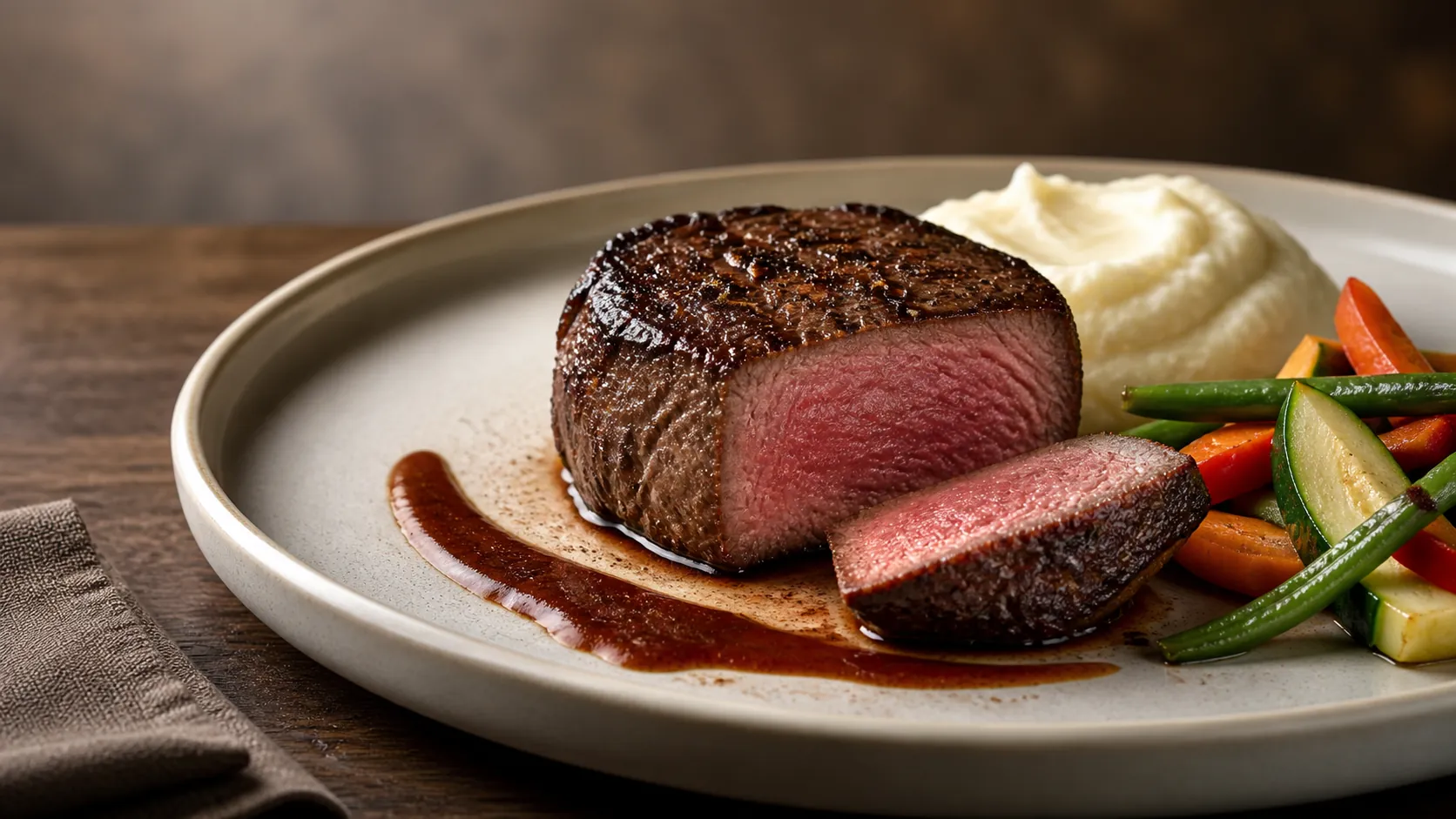
Filet mignon does not win attention by being the largest steak on the menu. It wins through tenderness.
The cut is compact, fine-grained, and naturally different from a strip or ribeye. It can carry a dark char on the outside while remaining delicate within. That combination makes filet a familiar choice for anniversaries, birthdays, date nights, and dinners when someone wants the steak to feel special without ordering an enormous portion.
For halal-conscious diners in Canton, the menu language matters as much as the cut. L.A. Bistro’s current menu describes its Creekstone Filet Mignon as a 10-ounce Creekstone Farms USDA Prime, halal-certified filet, aged and hand-cut from the heart of the tenderloin. It is charbroiled and served with zip sauce, mashed potatoes, and chef’s sautéed vegetables.
That description gives diners a concrete item to ask about. It does not turn every steak, sauce, side, or kitchen process into a blanket halal claim. The best ordering experience comes from understanding each decision inside the plate: why filet is tender, what the grade means, how doneness changes the texture, what charbroiling contributes, how zip sauce fits, and which details still deserve verification.
Decision one: choose filet for the right reason
Filet mignon comes from the tenderloin, a muscle that performs relatively little work. Less work generally means a finer grain and less connective tissue, which helps explain the cut’s tenderness.
That anatomy also explains what filet is not. It is not usually chosen for the heavy marbling of ribeye or the firmer, beef-forward chew of a strip. Its flavor can be more restrained. For many diners, that is exactly the point: a tender center, a carefully developed exterior, and a sauce or seasoning that complements rather than competes.
Choose filet when you value:
- A soft, fine-grained bite
- A thick steak with a clear contrast between seared exterior and center
- A composed special-occasion plate
- A substantial portion that is not built around maximum size
- A cut that pairs naturally with savory sauce and creamy potatoes
Choose another cut when your priority is intense marbling, a larger portion, a pronounced fat edge, or a firmer steak texture. L.A. Bistro’s current 14-ounce Creekstone N.Y. Strip is the closest halal-labeled comparison on the menu. Our halal steak guide for Canton and Metro Detroit explains the differences in detail.
There is no prestige prize for ordering filet when strip is what you actually enjoy. A good steak choice begins with texture and appetite, not the price column.
Decision two: read every word of the current menu description
The L.A. Bistro filet description contains several distinct claims:
Creekstone Farms identifies the named supplier or brand in the current menu wording.
USDA Prime identifies a quality grade. Prime is associated with high standards for factors including marbling and maturity. It is not a halal designation.
Halal-certified is the menu’s religiously significant sourcing statement for this specific filet.
10 ounces describes the listed portion before the realities of cooking loss and trimming are considered.
Hand-cut from the heart of the tenderloin describes where and how the portion is selected.
Aged describes a process intended to develop eating quality, though the short menu listing does not provide every technical detail of that process.
Charbroiled identifies the principal cooking method.
Zip sauce, mashed potatoes, and vegetables define the complete current plate.
These phrases should not be collapsed into one vague idea of “premium halal steak.” Each answers a different question. A diner may be satisfied by the published halal-certified statement, or may want to confirm the current product, certifier, package, and supplier before ordering. Ask according to your own standard.
The item-specific wording is important. The current filet and N.Y. strip descriptions say halal-certified. The current ribeye description does not. This guide therefore does not call the ribeye halal-certified or assume that every beef portion used elsewhere comes from the same product.
Decision three: verify the exact filet being served today
Menus record current intent, but restaurant supply can change. If halal status determines whether you can eat the steak, call before an important visit.
A precise question sounds like this:
“I’m planning to order the 10-ounce Creekstone Filet Mignon. Your current menu describes that exact cut as halal-certified. Can you confirm that the filet being served now is the same product?”
If you require documentation, ask whether the restaurant can identify the certifier or check the current packaging. If an employee needs to consult a manager or the kitchen, give them time. A delayed, sourced answer is better than an immediate guess.
Then ask about preparation separately:
- Does the filet use a marinade or seasoning blend beyond salt and spices?
- Does the zip sauce contain any wine, spirits, extracts, stock, or other ingredient relevant to my practice?
- Is the charbroiler shared with products I avoid?
- Can separate utensils or a cleaned cooking area be used if required?
- What ingredients are in the mashed potatoes and vegetables?
- Will any substitution be made tonight because of availability?
Not every diner requires the same answers. Explaining the relevant boundary helps the restaurant respond accurately. “Halal” can refer to meat sourcing, ingredients, cross-contact, or an entire certified operation; do not assume the employee knows which scope you mean.
Decision four: understand what ten ounces means at dinner
A 10-ounce filet is substantial, but ounces alone do not describe the experience.
Filet tends to be cut thick because the tenderloin has a compact shape. A thick portion creates a high center relative to its surface area. That helps the kitchen produce a charred exterior while managing the interior temperature, but it also makes doneness precision important.
The 10-ounce listing refers to the steak as portioned under the restaurant’s menu standard, not the amount a diner will literally consume after cooking. Heat drives off moisture and renders some fat, so cooked weight differs from raw portion weight. That is normal for meat.
Consider the whole plate. Mashed potatoes, vegetables, and zip sauce accompany the filet. A salad, soup, appetizer, bread, or dessert increases the meal further. A diner deciding between filet and strip should not compare 10 and 14 ounces in isolation; texture, sides, appetite, and preferred pacing matter.
For a lighter approach, order the filet plate and decide about dessert later. For a long celebration, share one appetizer across the table and add salad or soup only if the course progression genuinely improves the evening.
Decision five: translate doneness into the center you want
Doneness is where filet’s thickness becomes visible.
At lower temperatures, the center remains redder, softer, and more yielding. Medium-rare generally moves toward a warm red center. Medium typically produces a warm pink center with more firmness. Medium-well leaves little pink. Well-done cooks through, resulting in the firmest texture and lowest retained moisture.
Those are general descriptions, not a universal color chart. Lighting, meat structure, steak thickness, carryover cooking, and kitchen standards can affect appearance.
If steak terminology is familiar, state the desired doneness directly. If it is not, use plain language. “Warm pink center, not red” gives useful information. “Cook it perfectly” does not.
The safest or preferred temperature can also depend on medical advice, pregnancy, age, immune status, or personal practice. Follow guidance appropriate to you rather than a restaurant trend.
When the plate arrives, check the thickest part early. If the steak is materially different from the order, tell the server politely before eating most of it. The kitchen cannot correct a doneness problem it learns about only after the plate is empty.
Decision six: decide how much char you enjoy
L.A. Bistro describes the filet as charbroiled. Direct heat develops the browned exterior that gives steak much of its aroma and savory depth.
With filet, exterior development matters because the interior is so tender and relatively mild. A dark sear creates contrast: crisp or caramelized at the surface, soft in the center. The goal is pronounced browning without a bitter burned crust.
Diners differ here too. One person loves a strong char. Another prefers a lighter exterior. If that distinction strongly affects your enjoyment, mention it when ordering and ask what the kitchen can accommodate. Do not assume that “medium” communicates a surface preference; doneness describes the center more than the crust.
Sauce can soften that contrast. Some diners pour zip sauce over the entire steak. Others drag each bite through a small amount, preserving more of the char. There is no required steak ritual. Taste the filet first, then decide how much sauce improves it for you.
Decision seven: understand the Detroit zip-sauce connection
Zip sauce is closely associated with Metro Detroit steak dining. It is generally a rich, savory finishing sauce designed to amplify beef rather than replace it.
At L.A. Bistro, zip sauce appears with filet, N.Y. strip, lamb chops, and several other items. On the filet plate, it links the charred meat to the mashed potatoes and vegetables. A small amount adds gloss, salt, richness, and a familiar regional character.
The name is not an ingredient list. Recipes differ between restaurants, and a short menu description may not identify every stock, seasoning, dairy component, or flavoring. Diners who avoid alcohol should ask specifically whether the current sauce contains wine, spirits, extracts, or alcohol-derived ingredients. Diners with dairy, soy, gluten, or other allergies should ask about those concerns by name.
If the sauce does not fit your requirements, ask whether the filet can be served without it or whether a simpler alternative is available. Confirm that the cooking and plating process also meet your needs. Removing a visible sauce after it reaches the table is not the same as preparing the dish without it.
Decision eight: use the sides to shape each bite
The included sides keep the filet from becoming a one-note plate.
Mashed potatoes
Potatoes provide creaminess and a neutral base for the meat’s juices and zip sauce. They can turn a small piece of filet into a fuller bite. If dairy ingredients matter, ask about butter, milk, or cream.
Sautéed vegetables
Vegetables bring color, lightness, and texture. The current mix may change with kitchen preparation and availability. Their slight browning echoes the steak without adding another heavy component.
Optional soup or salad
The current beef-and-lamb menu allows a house salad, Caesar salad, or cup of soup to be added. The house and Caesar salads involve dressings, cheese, and possibly croutons; the soup includes chicken and stock components. Verify them separately if following halal guidelines or managing allergies.
A balanced way to eat the plate is not a rule but a sequence: taste the filet alone, then with sauce, then with potato, then with vegetables. That gives the cut room to show why it was chosen.
Decision nine: choose an opening course that does not compete
Filet is tender and relatively refined. An oversized or very rich appetizer can dull the contrast before the entrée arrives.
Hommous creates a Mediterranean beginning with pita, olive oil, paprika, and parsley. It is shareable and texturally different from steak.
Ravioli Palomino introduces the creamy tomato sauce found elsewhere on the menu, but its richness may make the full dinner heavier.
Firecracker Shrimp adds crisp texture and sweet heat. It works best when several people share it, especially before a filet with potatoes.
Mediterranean Salad adds cool vegetables, feta, olives, dressing, and grilled pesto pita. A shared portion can freshen the table before the main course.
Review every appetizer on its own. The current descriptions for Portobello and Caprese mention red wine and balsamic vinaigrette. A halal-conscious diner who avoids alcohol should ask whether a modification is possible rather than assuming a vegetable or cheese appetizer is suitable.
One shared opening course is often enough. Fine dining is not measured by the number of plates ordered.
Decision ten: match filet to the occasion
Date night in Canton or Plymouth
Filet gives one diner a deliberate steak centerpiece while the other can choose pasta, seafood, lamb, chicken, or a vegetarian entrée. Reserve when the date matters, and build enough time for a relaxed pace. Our Canton and Plymouth date-night guide provides a full evening framework.
Anniversary dinner
The tender cut, composed sides, and charbroiled presentation suit an anniversary without requiring an oversized meal. Confirm dietary details and availability before the night so the table is not solving them during the celebration.
Birthday
The filet can be the guest of honor’s individual choice while the group orders across L.A. Bistro’s Italian and Mediterranean menu. For six or more people, reserve by phone and discuss payment, cake policy, dietary needs, and timing in advance.
Parents’ night out
A 10-ounce steak can feel celebratory while still leaving room to return home without an all-evening production. Choose the reservation time around childcare and tell the server about a real departure deadline at the start.
Business dinner
Filet is familiar, self-contained, and easy to order precisely. Keep dietary questions private, arrange payment before the check arrives, and choose a pace that respects the professional schedule.
Dinner alone
Filet does not require an audience. A solo diner can sit down, request an exact doneness, and enjoy a composed plate at a personal pace. A special cut can mark the end of a long week just as legitimately as a milestone.
Filet versus the rest of L.A. Bistro’s halal-labeled choices
Use this comparison to identify the experience rather than chase the largest number.
| Current menu choice | Portion or format | Texture direction | Best fit |
|---|---|---|---|
| Creekstone Filet Mignon | 10-ounce steak | Finest-grained and tenderness-first | Refined steak dinner, anniversaries, date night |
| Creekstone N.Y. Strip | 14-ounce steak | Firmer bite and stronger beef character | Larger appetite, traditional steak focus |
| Grilled Lamb Chops | Three bone-in chops | Seared edges, tender centers, lamb flavor | Mediterranean-leaning dinner, chop lovers |
| Creekstone Burger | Beef patty on brioche | Casual, juicy handheld | Lunch, weekday dinner, relaxed meal |
The current menu explicitly describes the meat in those entries as halal-certified. Their sauces, buns, cheese, sides, marinades, and kitchen preparation may still need separate confirmation according to the diner’s standard.
Filet for a mixed-preference table
One advantage of ordering filet at an Italian and Mediterranean restaurant is that companions do not have to pretend they want steak.
A table can combine:
- Filet mignon for the tenderness-focused halal meat diner
- N.Y. strip or lamb chops for another halal-labeled meat direction
- Linguine Frutti Di Mare, salmon, or shrimp for a seafood preference
- Fettuccine Alfredo, Penne Palomino, or Diavolo Pasta for an Italian comfort-food choice
- Portobello Risotto, Ravioli Di Portobello, Eggplant Parmesan, or vegetarian pizza for a meatless route
- Burger, baguette, rollup, rice bowl, or pizza for a more casual appetite
Do not extend the filet’s halal-certified label to those other dishes. Each guest should verify the ingredients and preparation relevant to their order. The halal Italian food guide for Canton explains how to separate explicit menu statements from assumptions.
For a group, let guests preview the full menu before arrival. Collect firm dietary requirements privately, then call once with an organized set of questions.
A five-minute ordering checklist
Before leaving home:
- Confirm the current 10-ounce filet is the same halal-certified product described on the menu.
- Ask about any certification details you personally require.
- Verify the seasoning, zip sauce, sides, and shared cooking equipment where relevant.
- Decide on preferred doneness and how to describe it.
- Check current availability, hours, and reservation needs.
At the table:
- Name the Creekstone Filet Mignon rather than saying only “the steak.”
- State doneness clearly.
- Repeat any important sauce or cross-contact modification.
- Order starters with the complete plate in mind.
- Check the thickest part soon after the entrée arrives.
That preparation is not excessive. It turns uncertainty into a short conversation and lets the rest of dinner proceed normally.
Frequently asked questions
Does L.A. Bistro Canton serve halal filet mignon?
The current menu explicitly describes the 10-ounce Creekstone Filet Mignon as halal-certified and USDA Prime. Confirm the current product and preparation details important to you when ordering.
Is the entire filet plate halal-certified?
The halal-certified wording in the current description identifies the filet. This guide does not claim that the entire plate or kitchen carries a halal certification. Ask about zip sauce, potatoes, vegetables, seasoning, and shared equipment according to your requirements.
How large is the filet?
The current menu lists a 10-ounce filet before normal cooking changes. It comes with mashed potatoes, sautéed vegetables, and zip sauce.
What is the difference between filet and N.Y. strip?
Filet is generally finer-grained and more tender. The strip has a firmer bite, more pronounced beef character, and a larger current portion at L.A. Bistro. Both current descriptions identify the steaks as USDA Prime and halal-certified.
What doneness is best for filet?
There is no universal best. Many diners choose a pink center to preserve tenderness, while others prefer more cooking for taste, religious, or health reasons. State the center you want and follow any medical guidance relevant to you.
Can the zip sauce be left off?
Ask the restaurant whether the steak can be prepared and plated without zip sauce. If avoiding an ingredient, request omission before cooking rather than removing the sauce at the table.
Can I reserve for a special occasion?
Yes. Parties of six or more should call for a reservation. Smaller parties can also call when timing, dietary confirmation, or an important date makes advance planning useful. See the reservation page for current information.
Where is L.A. Bistro Canton?
The restaurant is at 44314 Cherry Hill Road, Canton, Michigan 48187, convenient to Canton, Plymouth, Westland, Livonia, and western Metro Detroit diners. The phone number is (734) 392-7028.
Tenderness becomes meaningful when the details are clear
Halal filet mignon in Canton is not merely a luxury keyword. It is a specific cut, product statement, cooking decision, and complete plate.
L.A. Bistro’s current 10-ounce Creekstone filet gives diners a clear starting point through its USDA Prime and halal-certified menu wording. Hand-cut tenderloin, charbroiling, zip sauce, mashed potatoes, and vegetables shape the experience after sourcing. Doneness, sauce ingredients, sides, and kitchen practices shape it further.
Review the current beef and lamb menu, decide whether tenderness is the quality you value most, and call (734) 392-7028 with the exact questions that matter to you. When the decisions are handled before the plate arrives, the final task is simple: taste the filet while it is hot.