
A search for halal steak restaurants in Canton or Metro Detroit can produce plenty of pins on a map. The harder part is deciding which restaurant fits the dinner you are actually planning.
One guest wants a clearly identified halal-certified filet for an anniversary. Another wants a substantial N.Y. strip after work. A family may need steak, pasta, seafood, vegetarian food, and familiar choices on the same menu. A birthday organizer may care as much about reservations and pacing as the cut of beef. Two restaurants can both appear under the same search phrase while offering completely different experiences.
That is why the most useful comparison is not a ranked list assembled from labels and star ratings. It is a scorecard. Meat sourcing matters, but so do the cut, grade, cooking method, sauces, sides, kitchen practices, atmosphere, group flexibility, and clarity of the restaurant’s answers.
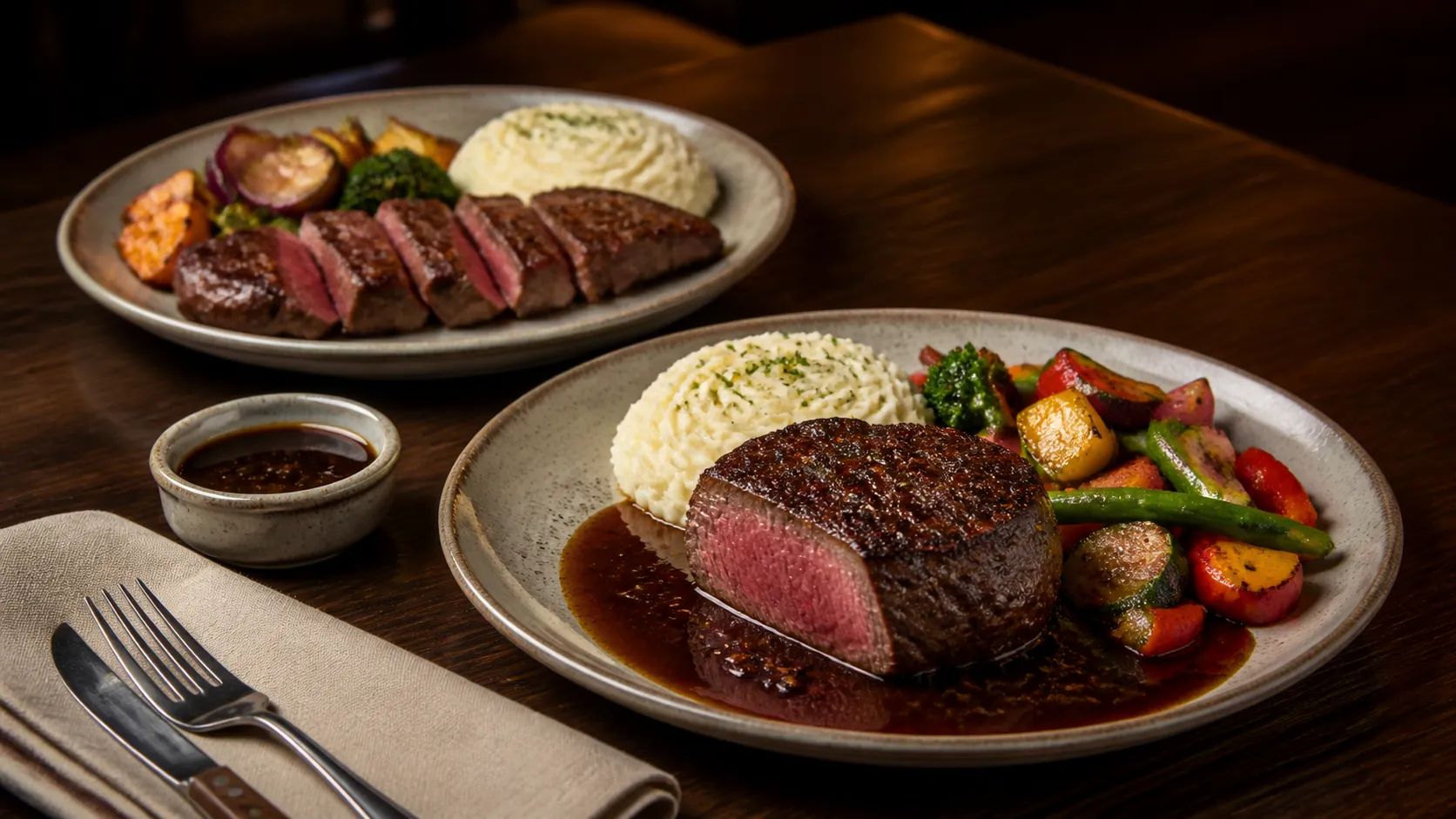
L.A. Bistro Canton offers a particularly local example. Its current menu explicitly describes the Creekstone Filet Mignon and Creekstone N.Y. Strip as halal-certified and USDA Prime. Those two steaks share a charbroiled presentation with zip sauce, mashed potatoes, and sautéed vegetables, but they are not interchangeable. The restaurant also serves Italian and Mediterranean food, which changes what a mixed table can order around the steak.
Use the following seven tests to compare a halal steak dinner in Canton, Dearborn, Detroit, or anywhere else across Metro Detroit.
Test one: is the halal statement specific?
The first test happens before anyone discusses marbling or doneness. Identify exactly what the restaurant is representing as halal.
A precise menu statement names an item, product, or category. At L.A. Bistro, the current descriptions call the 10-ounce Creekstone Filet Mignon and 14-ounce Creekstone N.Y. Strip halal-certified. That is more useful than a vague impression created by a social post or an unlabeled photograph.
Specific wording still deserves a current confirmation when the answer determines whether you can dine. Ask:
- Is this exact cut currently halal-certified?
- Is all beef at the restaurant covered, or only selected items?
- Has the supplier changed since the menu was published?
- Can the restaurant identify the certifier or show current packaging or documentation if requested?
- Do sauces, marinades, sides, or finishing ingredients need separate review?
Do not merge other quality claims into the halal question. “USDA Prime,” “Angus,” “all-natural,” “aged,” and “halal-certified” describe different attributes. Prime concerns beef quality and marbling. Angus refers to breed-related standards or branding. Halal certification addresses a religiously significant production claim. One label does not prove the others.
The same principle applies across Metro Detroit. A restaurant may have a fully halal menu, selected halal cuts, a special-order program, or no formal claim at all. Ask for the restaurant’s actual scope rather than interpreting one diner’s review as a universal policy.
Test two: does the restaurant offer the cut you want?
“Steak” is a category, not a single eating experience. The cut affects tenderness, flavor, portion, and the way a meal feels.
Filet mignon: tenderness first
Filet comes from the tenderloin and is known for a very tender texture. It typically has less pronounced marbling than fattier cuts, so the experience centers on softness, careful temperature, and the sauce or seasoning around it.
L.A. Bistro’s current filet is 10 ounces and cut from the heart of the tenderloin. It is the natural choice for someone who values tenderness, prefers a contained portion over an oversized steak, or wants a classic centerpiece for a date night or milestone.
N.Y. strip: a firmer, beefier bite
The strip offers more chew and a stronger beef-forward personality than filet. Its fat and marbling can create a richer edge while the muscle structure produces a firmer bite.
The current L.A. Bistro N.Y. strip is 14 ounces, making it both a different cut and a larger plate than the filet. A diner choosing between the two should not ask which is objectively better. Ask whether tonight calls for tenderness and restraint or a substantial steak with more texture.
Ribeye: confirm before assuming
Ribeye is prized by many steak diners for generous marbling and richness. L.A. Bistro lists an 18-ounce Creekstone Farms Prime Ribeye, but the current description does not call it halal-certified. This guide therefore does not classify it as a halal-certified choice. Diners should contact the restaurant for current sourcing rather than transferring the wording from the filet and strip to a different cut.
That detail illustrates why an item-by-item comparison matters. A restaurant’s steak section may contain several cuts while only some carry the statement a halal diner needs.
Test three: can the kitchen cook it the way you enjoy it?
A properly sourced steak can still disappoint if the diner and kitchen are using different temperature language.
Common doneness descriptions run from rare through medium-rare, medium, medium-well, and well-done. The visual center, firmness, and retained moisture change along that path. Restaurants may use temperature targets, but a steak continues to change briefly after leaving the heat, and every cut responds somewhat differently.
Filet’s thickness makes the center temperature especially important. A strip’s shape and fat edge create a different sear-to-center balance. If you have a firm preference, state it clearly. If you are unsure, describe what you want in plain language—such as a warm pink center or only a slight trace of pink—and ask what the restaurant recommends for that cut.
L.A. Bistro describes both halal-labeled steaks as charbroiled. Charbroiling can provide a dark exterior sear and smoky grilled character. Zip sauce adds the savory, glossy finishing note familiar to many Metro Detroit steak plates.
Avoid asking for a steak to be “perfect” without defining the target. The server cannot translate perfection, but the kitchen can work with a doneness request. If an overcooked or undercooked steak is materially different from what was ordered, mention it politely and promptly rather than eating the entire plate and raising the issue at the end.
Test four: what comes with the steak?
Some steak restaurants price the cut alone and sell every side separately. Others serve a composed plate. That difference affects value, portion planning, and dietary verification.
The L.A. Bistro filet and N.Y. strip currently come with:
- House zip sauce
- Mashed potatoes
- Chef’s sautéed vegetables
The arrangement makes the steak a complete entrée without requiring separate side orders. It also brings three additional recipe questions for diners following halal requirements closely. Meat certification does not automatically describe a sauce, potato preparation, or vegetables. Ask about ingredients and shared preparation where relevant.
The menu allows a house salad, Caesar salad, or cup of soup to be added to beef and lamb entrées. Before adding one by habit, consider the complete volume of the meal. A 14-ounce strip, mashed potatoes, vegetables, sauce, and starter can be substantial. Sharing an appetizer may make more sense for one table; another may want the full progression for a celebration.
If value is part of the comparison, calculate what dinner actually includes. A lower steak price with separate sauce and sides can finish above the price of a composed plate. A larger steak is not necessarily a better value if the diner would have preferred a smaller, more tender cut.
Test five: does the rest of the menu work for your table?
The strongest reason to choose one halal steak restaurant over another may have nothing to do with steak.
Consider a four-person dinner: one guest wants halal-certified steak, one prefers pasta, one wants seafood, and one is vegetarian. A conventional steakhouse may handle the first guest beautifully but leave the rest negotiating a short side-dish list. A broad Italian and Mediterranean menu creates more independent paths.
At L.A. Bistro, the steak diner can choose the halal-labeled filet or strip while companions explore:
- Pasta such as Fettuccine Alfredo, Penne Palomino, Diavolo Pasta, or Spaghetti Aglio Olio
- Seafood such as Linguine Frutti Di Mare, salmon, shrimp, or a seafood combination
- Vegetarian-marked Portobello Risotto, Ravioli Di Portobello, Eggplant Parmesan, pizza, rice bowl, and other options
- Chicken entrées including Piccata, Parmesan, Almond Chicken, and Firecracker Chicken
- Burgers, rollups, baguettes, salads, rice bowls, and pizza for a more casual appetite
These choices are not being labeled halal simply because they share a menu with halal-certified steaks. Each diner should verify ingredients or preparation important to them. The advantage is range: people can order different styles of food without forcing the entire table into the same steakhouse format.
For a deeper look at that crossover, read our guide to halal Italian food in Canton. The full menu is the best place to compare current descriptions before calling.
Test six: does the room fit the occasion?
A counter-service steak meal, a lively family restaurant, and a formal steakhouse may all serve good beef. The right setting depends on why people are gathering.
For a date night
Look for enough atmosphere to make dinner feel intentional, but also a menu both people want to explore. If one person wants filet and the other wants pasta or seafood, variety reduces compromise. Reserve when timing matters, especially on a weekend. Our Canton and Plymouth date-night guide offers a complete planning framework.
For a family dinner
Menu breadth, comfortable pacing, familiar foods, and clear policies often matter more than a hushed dining room. Check children’s choices, portion sizes, and whether appetizers can bridge the wait for entrées. Do not choose a steak destination that works for one adult and leaves everyone else piecing together a meal.
For a birthday
Ask about reservations, group size, cake or dessert policies, separate checks, seating, and accessibility before discussing decorations. A halal-certified steak can be the celebrant’s centerpiece while the group orders across the menu. The restaurant’s ability to execute twenty different requests may matter more than one dramatic menu item.
For a business dinner
Choose a restaurant where guests can review the menu privately and dietary questions can be handled discreetly. Confirm the expected meal length and payment plan. A high-quality steak loses some value if the group spends the evening confused about timing.
For an ordinary Tuesday
Not every steak needs ceremonial packaging. Easy parking, a reasonable drive, direct phone answers, and a complete plate can outweigh elaborate service. A Canton location is particularly practical for diners in Plymouth, Westland, Livonia, and western Wayne County who do not want every halal steak dinner to require a trip across the region.
Test seven: are the restaurant’s answers clear?
The final test is service before the meal.
Call during a reasonable hour—not in the middle of peak dinner service when possible—and ask about one exact order. For example:
“I’m considering the Creekstone Filet Mignon. Is that exact cut currently halal-certified, and can you tell me whether its zip sauce or preparation uses any ingredients I should verify separately?”
If cross-contact matters:
“Is the steak cooked on shared equipment, and can the kitchen accommodate the separation I require?”
Clear questions make clear answers possible. A staff member may need time to check a label or speak with the kitchen. That is better than receiving an immediate guess.
Be cautious when an answer changes from “this steak is halal-certified” to “everything should be fine” without details. Likewise, do not pressure an employee to promise a preparation the kitchen cannot guarantee. The goal is enough accurate information to make your own decision.
L.A. Bistro Canton can be reached at (734) 392-7028. Use the contact page to review the address and posted hours before traveling.
A closer comparison: filet versus N.Y. strip at L.A. Bistro
If both of the current halal-labeled steaks meet your requirements, the decision comes down to the experience you want.
| Decision point | Creekstone Filet Mignon | Creekstone N.Y. Strip |
|---|---|---|
| Current menu size | 10 ounces | 14 ounces |
| Current menu grade | USDA Prime | USDA Prime |
| Halal wording | Halal-certified | Halal-certified |
| Texture direction | Very tender, finer-grained | Firmer, more chew |
| Flavor direction | Milder cut that pairs closely with sauce | More assertive beef character |
| Cooking style | Charbroiled | Charbroiled |
| Included accompaniments | Zip sauce, mashed potatoes, vegetables | Zip sauce, mashed potatoes, vegetables |
| Often suits | Date nights, milestones, tenderness-first diners | Larger appetites, steak-focused dinners |
This table summarizes the current published menu and general differences between the cuts; it is not a promise about future availability or an instruction about religious compliance. Confirm the exact product when ordering.
The Metro Detroit factor: how far should you drive for steak?
Metro Detroit diners often search broadly because halal food communities, restaurants, and specialty markets extend across municipal borders. A result in Dearborn, Detroit, Troy, or another suburb can seem equally local on a screen while requiring a very different evening in practice.
Before choosing a destination, add travel to the scorecard:
- How long is the drive at the actual reservation time?
- Does the restaurant accept reservations?
- Is parking straightforward for older relatives or guests with mobility needs?
- Can dietary questions be resolved before the group leaves home?
- Will the full menu satisfy everyone who is making the trip?
- Is the experience distinctive enough to justify crossing the region?
A restaurant near home earns value through repeatability. Diners can return for a casual burger, a family meal, or a filet celebration without building the day around transportation. L.A. Bistro is located at 44314 Cherry Hill Road in Canton, near the Canton-Plymouth area and accessible to several western Metro Detroit communities.
The idea is not that the closest restaurant always wins. It is that distance should purchase something meaningful: a preferred cut, a verified preparation, a particular atmosphere, or a menu the whole group wants.
Build the dinner in the right order
Steak dinners can become overloaded before the entrée arrives. Build the meal from the center outward.
- Choose the cut. Decide between the tender 10-ounce filet and larger, firmer 14-ounce strip.
- Confirm the halal details. Verify current sourcing plus any sauce, preparation, or cross-contact questions.
- Account for included sides. Both current plates already contain potatoes and vegetables.
- Add a starter only if it improves the table. Hommous, Firecracker Shrimp, Caprese, or another appetizer may be shareable, but ingredients should be verified separately.
- Leave dessert as a decision, not an obligation. See how everyone feels after the entrée rather than ordering the entire evening at once.
For a group, have each guest preview the menu. The organizer can gather dietary requirements and call once with a structured list. Parties of six or more should use the restaurant’s phone reservation process described on the reservation page.
Common mistakes in a halal steak search
Treating a review as certification
An online reviewer may use “halal” casually, refer to a past supplier, or discuss only one item. Use reviews to discover a restaurant, then verify with the restaurant itself.
Assuming every cut shares one source
Filet, strip, ribeye, burger meat, steak bites, and beef tenderloin used in other dishes may be purchased or portioned differently. Ask about the exact one.
Looking only at the steak price
Compare size, grade, included sides, sauces, and service format. Also consider whether the rest of the table can order satisfying meals.
Ignoring preparation
Certification of raw meat and preparation of a composed restaurant dish are connected but separate questions. Discuss marinades, sauces, equipment, and cross-contact according to your needs.
Ordering the biggest cut by default
An 18-ounce steak is not automatically more enjoyable than a 10-ounce filet. Choose by texture, richness, appetite, and occasion—not by a contest of ounces.
Waiting until arrival to ask
Important dietary requirements are easier to address before the kitchen is busy and the group is seated. Call ahead, especially for birthdays and large parties.
Frequently asked questions
Does L.A. Bistro Canton serve halal-certified steak?
The current menu explicitly describes its Creekstone Filet Mignon and Creekstone N.Y. Strip as halal-certified. Confirm the current product and any preparation details important to you when ordering.
Is every steak at L.A. Bistro halal-certified?
This guide does not make that claim. The current ribeye description, for example, does not use halal-certified wording. Ask about each exact cut rather than generalizing.
What is the difference between the filet and N.Y. strip?
The 10-ounce filet prioritizes tenderness and a finer texture. The 14-ounce strip offers a larger portion, firmer bite, and more assertive beef character. Both current menu descriptions identify the cuts as USDA Prime and halal-certified.
What sides come with the steaks?
The current filet and strip entrées include zip sauce, mashed potatoes, and chef’s sautéed vegetables. A house salad, Caesar salad, or cup of soup can be added under the current menu policy.
Can someone who does not want steak find a full dinner?
Yes. L.A. Bistro’s broader Italian and Mediterranean menu includes pasta, seafood, chicken, vegetarian dishes, burgers, pizza, rice bowls, rollups, salads, and appetizers. Dietary status should be confirmed item by item.
Is L.A. Bistro convenient for a group?
The menu variety can support groups with different preferences. Parties of six or more should call for a reservation and discuss dietary needs, timing, and seating in advance. Our large-group dinner guide covers the planning details.
Can I order steak for takeout?
The restaurant offers online takeout ordering, subject to current item availability. Steak texture changes during travel, so consider the drive and ask the restaurant about the best pickup timing.
Make the scorecard serve the dinner
The best halal steak restaurant in Canton or Metro Detroit is not determined by one label, one photograph, or the largest cut on the menu. It is the restaurant that can answer your sourcing questions, cook the cut you enjoy, complete the plate well, and make the entire table feel considered.
At L.A. Bistro Canton, the current halal-certified descriptions for the Creekstone filet and N.Y. strip create two clear steak paths: tenderness-first and beefier, larger-format dining. Zip sauce, mashed potatoes, vegetables, and a broad Italian-Mediterranean menu shape the rest of the experience.
Start with the current beef and lamb menu, then call (734) 392-7028 to confirm the details that matter to you. A thoughtful five-minute conversation before leaving home can do more for dinner than an hour spent scrolling through generic restaurant rankings.