
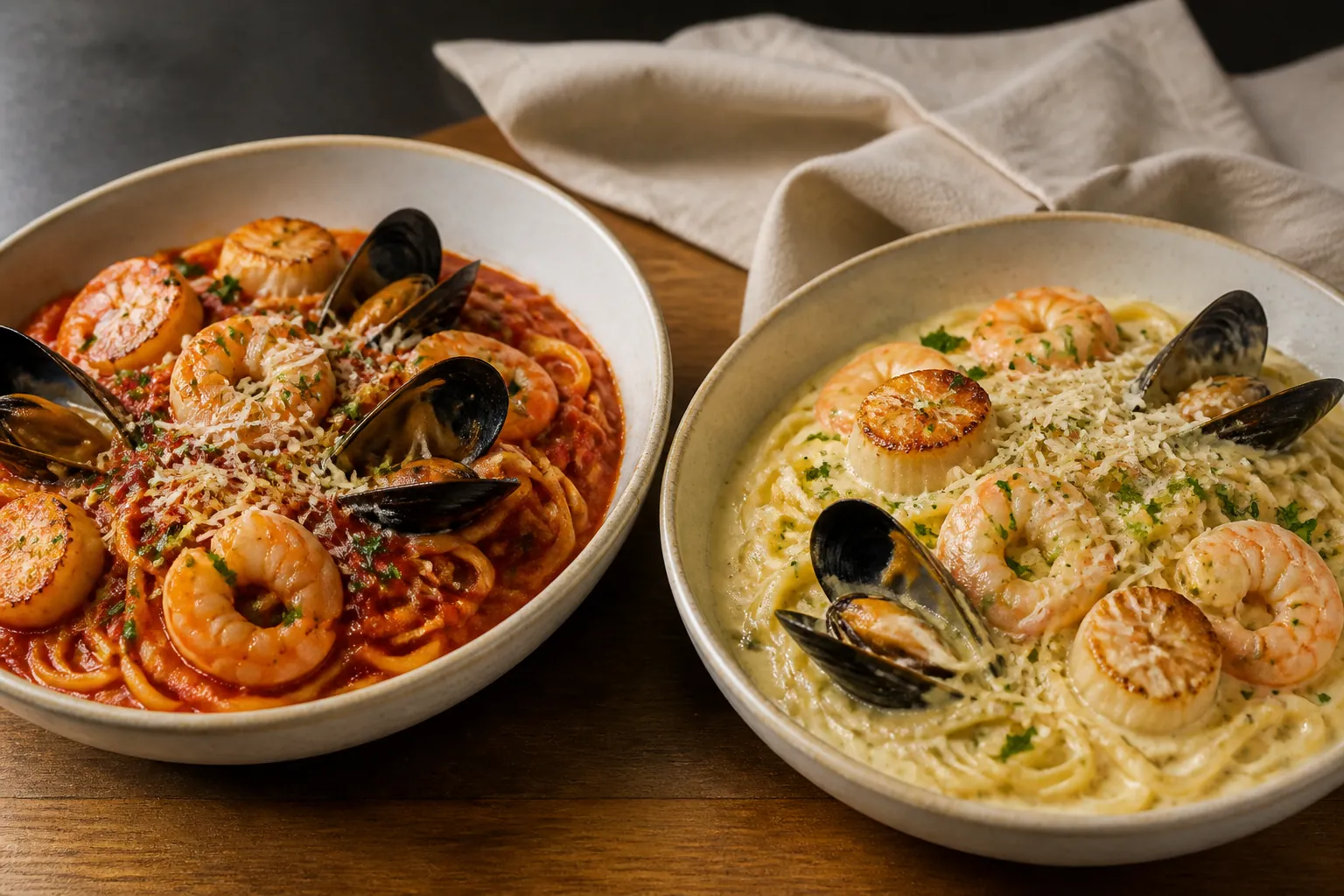
The most important decision in L.A. Bistro Canton’s Linguine Frutti Di Mare arrives before the pasta does.
Spicy marinara or lemon garlic cream?
Both versions begin with linguine, shrimp, scallops, mussels, and shredded Parmesan. From there, they head in opposite directions. Spicy marinara makes tomato and heat part of every forkful. Lemon garlic cream creates a richer, smoother coating with citrus brightness around the edges. The seafood does not change, but the experience does.
That makes this less like choosing between two minor sauce substitutions and more like choosing the entire personality of dinner.
For diners searching for seafood pasta in Canton, Michigan, this guide follows the decision from the first question to the last bite. It explains what each shellfish contributes, how the sauces interact with the pasta, what to pair with the entrée, and what to ask before ordering when allergies or dietary requirements matter.
First, what is Linguine Frutti Di Mare?
“Frutti di mare” literally points to the “fruits of the sea.” On restaurant menus, the name commonly identifies a pasta built around a mix of seafood rather than a single fish or shellfish.
L.A. Bistro’s current version is specific: shrimp, scallops, and mussels tossed with linguine, finished with shredded Parmesan, and served with a choice of spicy marinara or lemon garlic cream sauce. The menu marks it as a Bistro Favorite.
That short description reveals the dish’s organizing idea. It is not a plate of pasta with one seafood garnish placed on top. Three kinds of shellfish are distributed through long noodles and sauce, giving a diner several textures within one entrée.
It also separates the dish from other choices on the seafood menu. Salmon Al-Bianca centers one grilled fillet. Shrimp Al-Bianca concentrates on jumbo shrimp. Firecracker Shrimp puts a fried, sweet-spicy preparation at the center. Linguine Frutti Di Mare is the menu’s seafood-pasta route, with the sauce binding everything together.
The three-seafood test
A useful Frutti Di Mare should not make every seafood component feel interchangeable. Shrimp, scallops, and mussels each have a different job.
Shrimp: the familiar anchor
Shrimp is usually the easiest component to recognize at a glance. Its curved shape and firmer bite give the bowl a familiar center, especially for diners who eat shrimp more often than mussels or scallops.
In the marinara version, the ridges and curves pick up tomato sauce and spice. In the cream version, the surface carries more of the smooth lemon-garlic coating. Either way, the shrimp gives the fork something substantial alongside the softer noodles.
If shrimp is the only seafood you want, this mixed dish may not be the most direct choice. Firecracker Shrimp in Canton or Shrimp Al-Bianca keeps the focus on that one ingredient. Frutti Di Mare is for the diner who wants the contrast created by the full trio.
Scallops: the tender, mild counterpoint
Scallops bring a different texture. They are tender and delicately sweet when properly prepared, without the layered structure of shrimp or the shell presentation of mussels. That makes them a quiet counterweight to the stronger sauce choice.
Spicy marinara puts the scallop’s mildness against tomato and heat. Lemon garlic cream keeps the overall flavor softer and rounder. A diner who especially values scallops may prefer the cream sauce because it does not place spicy tomato at the front of every bite. A diner who wants more contrast may prefer marinara.
Mussels: the briny punctuation
Mussels provide the most unmistakable taste of the sea in the combination. They also change the pace of eating because the diner encounters shells among the noodles instead of moving through identical bites.
That pause is part of the dish. One forkful may carry linguine, shrimp, and marinara. The next may center a mussel and a smaller amount of sauce. The meal unfolds rather than repeating.
Mussels are mollusks, which matters for allergy conversations. Someone who tolerates one form of seafood should never assume every other kind is safe. More on that before the end of the guide.
Sauce path one: choose spicy marinara for energy
The spicy marinara route is the brighter and more assertive choice.
Tomato contributes acidity and savory depth. The heat gives the sauce forward motion, while the linguine distributes it across the plate. Shrimp, scallops, and mussels still contribute their distinct textures, but tomato becomes the flavor that connects them.
Choose spicy marinara when you want:
- A tomato-led seafood pasta
- Noticeable heat rather than dairy richness
- A brighter counterpoint to the natural sweetness of shrimp and scallops
- A sauce that feels distinct from L.A. Bistro’s Al-Bianca entrées
- A meal where every strand of linguine carries a lively, savory coating
“Spicy” is not a universal measurement. One person’s pleasant warmth is another person’s limit. Ask the restaurant how the current sauce is running if heat level will determine whether you enjoy dinner. It is better to ask before ordering than to assume the word means mild, medium, or intense.
The marinara route can also guide the appetizer choice. If the entrée already brings tomato and spice, a different opening creates more range. A crisp salad, soup, or appetizer without another heavy red sauce can keep the meal from repeating itself.
Sauce path two: choose lemon garlic cream for richness
Lemon garlic cream shifts the same ingredients into a fuller, smoother register.
Cream gives the sauce body and helps it cling closely to linguine. Garlic adds a savory base. Lemon offers the brightness needed to keep seafood and cream from feeling one-dimensional. The result is rich, but not meant to taste like plain dairy poured over pasta.
Choose lemon garlic cream when you want:
- A silky sauce wrapped around the noodles
- Garlic and citrus instead of tomato heat
- A gentler background for scallops and shrimp
- A flavor connection to Salmon Al-Bianca or Shrimp Al-Bianca
- A more comforting, rounded pasta experience
This choice has an obvious dietary implication: the published name identifies it as a cream sauce, and the dish is finished with Parmesan. Diners avoiding dairy should ask about both the sauce and garnish rather than requesting “no cheese” and assuming that removes all dairy.
It is also worth noticing how the cream version relates to the rest of the menu. If a companion orders Salmon Al-Bianca or Shrimp Al-Bianca, the table may end up with several entrées built around lemon cream. That can be exactly right when everyone shares the same craving. If the table wants contrast, one Frutti Di Mare with spicy marinara and one Al-Bianca entrée creates a broader tasting path.
A five-question sauce decision
Still undecided? Run through these five questions.
1. Do you want heat?
Yes points toward spicy marinara. No points toward lemon garlic cream, although garlic and citrus still give that sauce plenty of flavor.
2. Is tomato part of the craving?
If the imagined dinner includes red sauce tangled through long pasta, choose marinara. If the craving is specifically for creamy seafood pasta, choose lemon garlic cream.
3. What else is the table ordering?
A table already sharing rich appetizers may appreciate the brighter tomato route. A table beginning with a fresh salad may have more room for the cream sauce.
4. Which seafood do you most want to notice?
Spicy marinara creates stronger contrast. Lemon garlic cream gives mild scallops and shrimp a softer setting. Mussels remain distinctive either way.
5. How do you want the last few bites to feel?
Cream sauce grows richer as the meal continues. Spicy marinara keeps delivering tomato and heat. Think beyond the first taste and choose the sauce you will still want near the bottom of the bowl.
There is no objectively correct answer. The better sauce is the one that matches the rest of your order and the way you want dinner to progress.
Why linguine makes sense here
Long linguine strands create continuity in a dish made from separate seafood pieces.
They hold sauce along their surface, wrap around pieces of shrimp or scallop, and pull smaller savory bits into a forkful. A short pasta would divide the experience into individual shapes. Linguine makes the diner gather the dish together.
That shape creates one practical challenge: seafood and noodles do not always distribute themselves evenly. Before eating, gently turning the linguine through the sauce can prevent all the seafood from remaining on top while plain noodles settle below. The goal is not aggressive mixing. It is simply to make sure the sauce coats the pasta and the seafood remains part of the whole plate.
Parmesan provides a salty, savory finish in L.A. Bistro’s listed preparation. Diners who prefer less cheese over seafood can ask whether the kitchen can reduce or omit the topping. Diners with a dairy concern still need to discuss the selected sauce and preparation; removing the visible Parmesan alone may not solve the issue.
Build the meal around the pasta, not on top of it
Linguine Frutti Di Mare already combines pasta, three seafoods, sauce, and cheese. It does not need several similarly rich courses to feel complete.
The seafood section currently offers the option to add a house salad, Caesar salad, or cup of soup. Availability, ingredients, and pricing can change, so consult the current menu when ordering.
Here are three sensible ways to plan the meal:
The clean opening
Begin with a salad, then let the seafood pasta serve as the sole rich course. This works especially well with lemon garlic cream.
Ask about dressing ingredients if dietary restrictions matter. A Caesar salad and its dressing may introduce dairy, egg, fish-derived ingredients, or other concerns depending on the recipe.
The shared appetizer route
Split one appetizer across the table, keeping the portion modest. If you plan to order spicy marinara, choose an opening that does not simply repeat tomato sauce. If you plan to order lemon garlic cream, avoid stacking multiple creamy dishes unless that is the deliberate goal.
The seafood sampler route
For a table that genuinely wants to explore seafood, share a shrimp appetizer and then order Frutti Di Mare. The key is understanding that the entrée already includes shrimp. This route is about comparing preparations, not maximizing the number of separate items.
The steak-and-seafood dinner guide for Metro Detroit explains another way to build contrast when some guests want shellfish and others want steak. Dietary verification still needs to happen item by item.
Allergy and dietary questions deserve precise answers
A mixed seafood pasta requires more specific questions than “Does this contain seafood?” The answer is already yes. The useful conversation identifies which seafood, which sauce ingredients, and how the kitchen handles them.
Shellfish and mollusks
The dish contains shrimp, scallops, and mussels. Shrimp is a crustacean; scallops and mussels are mollusks. People can react differently across these categories. A diner with any seafood allergy should speak directly with the restaurant before ordering and explain the exact allergy rather than using a broad preference statement.
Cross-contact can also matter. Ask about shared utensils, surfaces, cookware, fryers, and prep areas based on your level of sensitivity. A menu description cannot provide an individual safety guarantee.
Dairy
Lemon garlic cream and the shredded Parmesan topping make dairy an immediate question. Spicy marinara may look like the obvious dairy-free route, but the listed Parmesan still needs to be addressed, and recipes or shared preparation may add considerations not visible in the short menu text.
Gluten and wheat
Standard linguine is generally wheat pasta. The current menu description does not label Linguine Frutti Di Mare gluten-free. Do not infer that choosing one sauce changes the pasta itself.
Garlic, tomato, and spice
The cream choice names garlic and lemon. The marinara choice names tomato through the sauce and signals heat through “spicy.” These are not hidden themes; they are central to the decision. If garlic, tomato, citrus, or chile is a concern, ask about ingredients and possible modifications before ordering.
Halal requirements
Do not automatically transfer the halal-certified wording shown on certain steak and lamb menu items to this pasta. Seafood practices can also differ among diners, particularly around shellfish, while sauce ingredients and kitchen handling remain separate questions.
If halal compliance matters to you, explain your standard and ask specifically about the seafood, sauce, cheese, stocks or flavor bases, and shared preparation. A careful question is more useful than treating “seafood” as an automatic answer.
Is it a good date-night order?
It can be, especially when both diners enjoy seafood and do not mind the hands-on rhythm created by mussel shells.
For a polished but relaxed evening, the dish offers more conversation than a predictable single-protein plate. The sauce choice itself becomes part of planning the meal, and two diners can order different versions if they want to compare.
That said, this is not the ideal “safe order” for someone who is unsure about mussels, scallops, spice, cream, or shellfish. A date night goes better when neither person treats dinner as a test. The Canton and Plymouth date-night guide can help match the full order to the kind of evening you want.
For families, consider whether younger diners are comfortable with mixed seafood and visible shells. The family dinner guide for Canton offers a broader ordering strategy when the table includes several preferences.
Ordering it for takeout
Frutti Di Mare can travel, but timing matters.
Long pasta continues absorbing sauce after it leaves the kitchen. Cream sauce may thicken as it cools. Marinara can settle into the noodles. Seafood also loses heat faster than a dense steak or baked pasta.
For the best takeout experience:
- Plan pickup close to the time you will eat
- Keep the container level during the drive
- Open and gently turn the pasta through the sauce when you arrive
- Reheat only if necessary, using short, gentle intervals rather than prolonged high heat
- Avoid repeatedly reheating shrimp, scallops, and mussels, which can become firm
- Refrigerate leftovers promptly and follow current food-safety guidance
If the trip is long, ask whether the restaurant recommends any packing adjustment. Not every modification is available, but the staff can tell you how the kitchen currently handles the dish.
The cream and marinara versions behave differently in the container. Lemon garlic cream is more likely to look thicker after cooling. Spicy marinara may be easier to loosen through the linguine with gentle mixing. Neither benefits from sitting in a car while other errands happen.
The final fork: which version should you order in Canton?
Choose spicy marinara if your ideal seafood pasta is tomato-forward, lively, and warm with spice. It creates the stronger contrast against mild scallops and naturally sweet shrimp.
Choose lemon garlic cream if you want a smooth, rich coating with citrus and garlic around the seafood. It gives the bowl a softer, more comforting direction.
Choose a different seafood entrée if you want one protein rather than a mixed trio, rice and vegetables instead of linguine, or a fried sweet-spicy preparation rather than sauced pasta.
That is the real strength of Linguine Frutti Di Mare at L.A. Bistro Canton: it does not force every seafood diner into the same experience. The shrimp, scallops, mussels, linguine, and Parmesan establish the foundation. The sauce lets you decide whether dinner should feel fiery and tomato-bright or creamy and citrus-led.
Review the current L.A. Bistro Canton menu, then visit on Cherry Hill Road when a mixed-seafood pasta craving calls for more than one note.